
The main difference in DSP vs SSP is simple: a demand-side platform (DSP) helps advertisers buy ad impressions, while a supply-side platform (SSP) helps publishers sell them. Both platforms work together in programmatic advertising, connecting advertisers who want to reach specific audiences with publishers who have advertising space to sell.
The two sides meet through an ad exchange or another programmatic marketplace, where real-time bidding (RTB) can determine which advertiser wins an available impression. This process happens automatically, often in around 100 milliseconds, before an advertisement appears on a webpage or app.
Understanding the difference between DSP and SSP helps marketers choose the right advertising technology for their goals. It also helps publishers understand how their inventory is sold and how they can generate more revenue from their content.
Let’s break down how each platform works, compare their main features, and explain which option makes sense for your business.
What Is a DSP (Demand-Side Platform)?
A demand-side platform (DSP) is an advertising technology platform that allows advertisers and media buyers to purchase digital ad impressions automatically across multiple websites, apps, and other digital channels.
Instead of negotiating with individual publishers, advertisers can use one platform to manage campaigns, set budgets, choose audiences, and bid on available advertising inventory.
How does a DSP work?
DSPs automate much of the media-buying process. When an impression becomes available, the platform evaluates the opportunity against the advertiser’s campaign settings and decides how much to bid.
For example, imagine you’re promoting a project management tool and want to reach small business owners in the United States. Using a DSP, you could configure a campaign to target relevant audiences, select suitable ad formats, and set a maximum bid.
The platform then evaluates available impressions and bids on opportunities that match your criteria.
A DSP typically gives advertisers control over:
- Audience targeting: Reach people based on available demographic, geographic, contextual, and behavioural signals.
- Bidding: Set bid strategies and adjust bids according to campaign objectives.
- Budget management: Define campaign spending limits and allocate budgets across campaigns.
- Frequency capping: Limit how often the same user sees an ad within the platform’s measurement capabilities.
- Campaign reporting: Monitor impressions, clicks, conversions, cost per acquisition (CPA), and other performance metrics.
These controls help advertisers make buying decisions based on campaign objectives rather than purchasing ad placements individually.
What is a DSP in advertising used for?
DSP advertising is particularly useful for advertisers running campaigns across multiple publishers or channels. A single buying platform can provide access to inventory from different sources, depending on its integrations and available supply.
Advertisers can use DSPs to increase brand awareness, drive website traffic, generate leads, or encourage purchases. Automated bidding and reporting also help media buyers assess campaign performance and adjust their approach.
However, traditional DSPs can involve platform fees, onboarding requirements, or minimum spending commitments. These factors may make some enterprise-oriented solutions less practical for smaller businesses.
What Is an SSP (Supply-Side Platform)?
A supply-side platform (SSP) is an advertising technology platform that helps publishers sell available ad inventory to advertisers programmatically.
While a DSP focuses on buying impressions, an SSP focuses on selling them. It connects a publisher’s available advertising space with potential buyers and helps manage the process of evaluating bids and allocating inventory.
For example, imagine you run a technology blog with thousands of daily visitors. You have display ad placements on your articles, but negotiating individual advertising deals would take considerable time.
An SSP allows you to make eligible impressions available to multiple buyers, creating more opportunities to sell your inventory.
How does an SSP work?
An SSP connects publishers with demand sources, including DSPs and ad exchanges. When an ad placement becomes available, it sends bid requests to eligible buyers, collects bids, and helps select the winning ad.
Publishers use SSPs to manage their inventory and control how ads are sold and displayed. Key features include:
- Floor prices: Set minimum prices for impressions.
- Buyer access: Control which buyers can bid on inventory.
- Ad quality: Block unwanted advertisers or creatives.
- Inventory management: Organise ad placements across websites and apps.
- Revenue optimisation: Compare demand sources to improve earnings.
SSPs help publishers reach more buyers and automate ad sales, but actual revenue depends on demand, audience quality, and inventory performance.
DSP vs SSP: Key Differences
The easiest way to understand DSP vs SSP is to look at the role each platform plays in the advertising transaction.
| Feature | DSP (Demand-Side Platform) | SSP (Supply-Side Platform) |
| Main user | Advertisers and media buyers | Publishers and media owners |
| Primary goal | Buy ad impressions efficiently | Sell ad impressions effectively |
| Main controls | Audience targeting, bids, budgets, frequency | Floor prices, inventory, buyer access, ad quality |
| Transaction role | Submits bids to buy inventory | Makes inventory available and evaluates demand |
| Pricing focus | How much to bid for an impression | How much an impression can earn |
| Success metrics | CPA, ROAS, conversions, reach, CPM | Revenue, effective CPM, fill rate, yield |
| Typical task | Find and bid on impressions that match a campaign | Make available impressions attractive to eligible buyers |
The fundamental distinction is buying versus selling.
A DSP helps advertisers decide which impressions to buy and how much to bid based on their campaign goals. An SSP helps publishers sell their inventory, manage buyer access, and evaluate bids.
Both platforms influence impression pricing but serve opposite sides of the transaction. Advertisers aim to reach their target audience at an acceptable cost, while publishers focus on maximising revenue and maintaining ad quality and a good user experience.
SSP vs DSP: Which One Controls the Price?
Neither platform simply sets the final price in every transaction.
Advertisers establish bidding strategies and campaign limits through their DSPs. Publishers can set floor prices and other inventory rules through their SSPs. The auction mechanism then determines the winning bid according to the applicable rules.
The highest bid does not always win every type of programmatic transaction. Auction rules, deal terms, eligibility requirements, and other conditions can affect the outcome.
How DSPs and SSPs Work Together
DSPs and SSPs work together in programmatic advertising: DSPs help advertisers buy impressions, while SSPs help publishers sell them. They automate the process through real-time bidding (RTB), reducing the need for manual negotiations.
The Programmatic Auction, Step by Step
Here’s how a typical auction works when someone visits a website:
- A user opens a webpage. An ad placement becomes available.
- The SSP sends a bid request. It shares information about the impression and relevant targeting signals, subject to privacy and consent requirements.
- DSPs evaluate the opportunity. They check whether the impression matches their advertisers’ targeting criteria, budgets, and bidding strategies.
- DSPs submit bids. Each platform decides how much to offer for the impression.
- The auction selects a winner. The winning bid is determined by the auction rules and deal conditions.
- The ad appears. The selected creative is delivered to the webpage.
The process often takes around 100 milliseconds, allowing advertisers to bid on individual impressions rather than commit to fixed placements in advance, which is how programmatic video works.
Where Do Ad Exchanges and Ad Networks Fit?
An ad exchange is a digital marketplace that facilitates the buying and selling of advertising inventory. It connects supply and demand, helping eligible buyers compete for impressions offered by publishers.
An ad network, on the other hand, typically aggregates advertising inventory from multiple publishers and packages it for advertisers. It may offer audience segments, campaign management, and simplified access to advertising opportunities.
The boundaries between these technologies can overlap. Some ad networks use DSP and SSP integrations, while some advertising platforms combine several functions in one solution.
For a broader explanation of how these technologies connect, see our guide to programmatic advertising.
Do You Need a DSP, an SSP or an Ad Network?
The right option depends on your role in advertising, your budget, and how much control you need over buying or selling inventory.
If You’re an Advertiser
A DSP can be a good fit if you manage substantial advertising budgets, need advanced audience targeting, or run campaigns across multiple publishers and channels.
It offers bidding controls, campaign optimisation, and reporting in one place. However, minimum spending requirements and platform complexity can make some DSPs less accessible to smaller businesses.
For small and growing businesses, a self-serve ad network can be a simpler starting point. For example, AdsNetwork lets advertisers launch campaigns, promote native ads, and reach relevant audiences without traditional DSP minimum spend requirements.
This makes it a practical option for businesses looking to test native advertising, attract new audiences, and manage campaigns directly without the complexity of a dedicated DSP.
If You’re a Publisher
An SSP is worth considering if you own a website or app and want to monetise your available ad inventory through programmatic demand.
An SSP can connect your inventory with multiple buyers, manage auction settings, and help you compare revenue opportunities. It’s particularly useful for publishers that have enough inventory and technical resources to benefit from dedicated supply-side tools.
However, publishers with smaller websites may not need to configure and manage an SSP independently.
An ad network can offer a simpler alternative by connecting publishers with advertising demand and handling parts of the monetisation process. Instead of managing every demand integration yourself, you can use an established platform to access available campaigns.
AdsNetwork offers publishers access to the best ad networks for publishers without requiring them to set up and operate their own SSP infrastructure.
DSP and SSP Examples
Several well-known companies offer DSPs and SSPs, while some provide tools for multiple parts of the advertising process.
Examples of DSPs:
- Google Display & Video 360: Helps advertisers manage programmatic campaigns across digital channels.
- The Trade Desk: Enables advertisers and agencies to buy digital media.
Examples of SSPs:
- Magnite: Helps publishers monetise display, video, and connected TV inventory.
- PubMatic: Provides tools for programmatic advertising and publisher monetisation.
Google Ad Manager is also widely used by publishers, combining ad serving with tools for managing and monetising inventory.
When choosing a platform, consider its supported channels, integrations, fees, targeting options, and reporting features.
Conclusion
The main difference in DSP vs SSP comes down to who is buying and who is selling. A DSP helps advertisers purchase impressions, while an SSP helps publishers monetise their inventory. Together, they support the automated auctions that power much of programmatic advertising.
If you’re an advertiser who wants to reach relevant audiences without committing to traditional DSP minimums, AdsNetwork offers a straightforward way to get started.
Reach your audience without DSP minimums: start advertising on AdsNetwork.
Featured Posts
Nov 9, 2026
11 min read
10 Best Popunder Ad Networks in 2026
Choosing among the best popunder ad networks in 2026 depends on your goals. AdsNetwork is our first choice…
Read Article
Nov 6, 2026
8 min read
How Much Does Native Advertising Cost in 2026?
Native advertising costs vary depending on your target audience, industry, campaign goals and pricing model. Some campaigns can…
Read Article
Nov 2, 2026
6 min read
Banner Ad Sizes: The Complete 2026 Size Chart
Choosing the right banner size for display banner ads can affect your campaign’s visibility, engagement, and cost efficiency.…
Read ArticleNeed Help?
Our team is ready to help you launch successful campaigns.
AI-Powered Mobile
Monitor Your Campaigns Anywhere
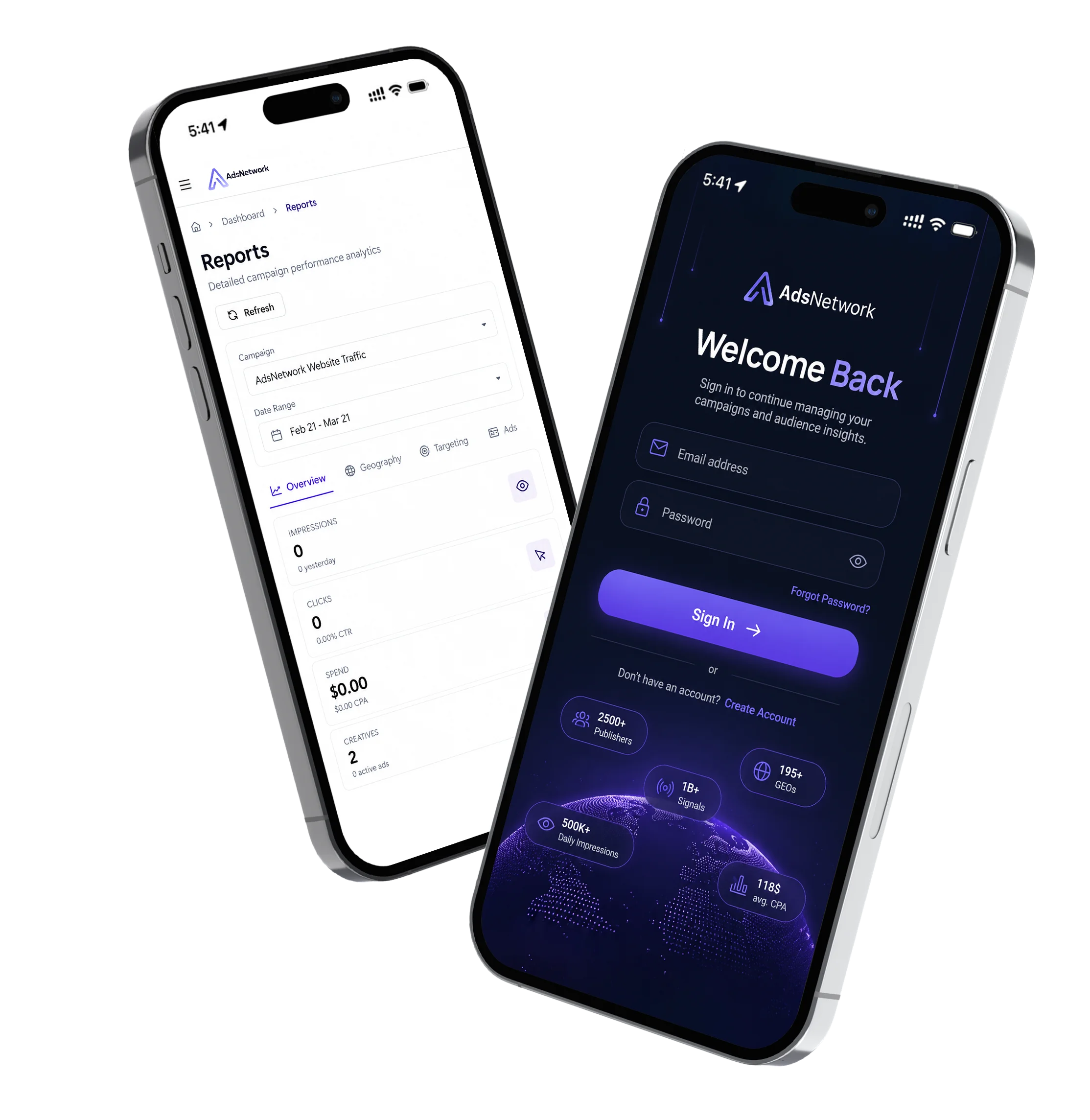
Stay connected to your live AdsNetwork campaigns with our mobile advertising app. Track impressions, clicks, conversions, campaign spend, and overall performance in real time—anytime, anywhere. Available for iOS and Android.