
Native advertising costs vary depending on your target audience, industry, campaign goals and pricing model. Some campaigns can attract clicks for just a few cents, while competitive markets such as finance, crypto and iGaming can require considerably higher bids.
So, how much does native advertising cost in 2026? As a general guide, native advertising CPM rates can range from around $2 to $10, while CPC costs can fall anywhere from $0.01 in lower-cost markets to $1 or more in competitive Tier 1 countries. These figures are indicative rather than fixed rates, as actual prices depend on the native ad network, inventory and campaign settings.
In this guide, we’ll look at common native advertising pricing models, estimated costs by country and industry, sample campaign budgets, and practical ways to get more from your ad spend.
Native Advertising Cost at a Glance

Native ads are designed to match the look and feel of the platform where they appear. They often appear as recommended articles, sponsored content or promotional cards within a website’s content feed.
The cost depends on how the campaign is charged and the results you want to achieve.
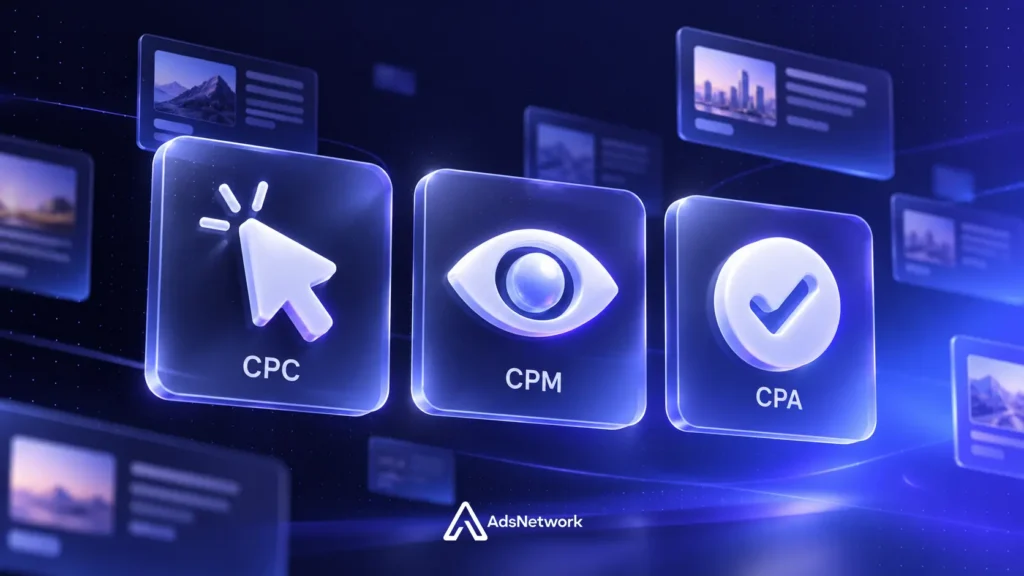
| Pricing model | How it works | Best suited for |
| CPC (cost per click) | You pay when someone clicks your ad. | Traffic generation and direct response |
| CPM (cost per mille) | You pay for every 1,000 ad impressions. | Brand awareness and reach |
| CPA (cost per action) | You pay for a defined action, such as a purchase or sign-up, when the buying arrangement supports it. | Performance-focused campaigns |
For advertisers, the most useful starting point is to match the pricing model to the campaign objective. CPC can make it easier to estimate the cost of attracting visitors, while CPM helps you plan campaigns focused on visibility.
Native Ads Pricing Models
Before setting a budget, it helps to understand how native advertising is priced.
CPC: Cost Per Click
With CPC pricing, you pay when a user clicks your ad. The amount you pay per click depends on factors such as audience location, competition, placement and the quality of your creative.
For example, if your average CPC is $0.20 and you spend $1,000, you could generate approximately 5,000 clicks before accounting for any additional fees or differences between your planned and actual CPC.
CPC is often a useful option for advertisers who want to drive visitors to a landing page, promote an offer or generate leads.
CPM: Cost Per Thousand Impressions
CPM stands for cost per mille, or the cost of 1,000 ad impressions. You pay based on how often your ad is displayed rather than how many people click it.
For example, a $4 CPM means you pay $4 for every 1,000 impressions. At that rate, a $1,000 budget could buy around 250,000 impressions before any additional costs.
Native ads CPM rates vary by market, audience and placement. AdsNetwork lists indicative native advertising CPM ranges of approximately $2 to $10, with some competitive verticals and targeting options reaching the higher end.
CPM is generally worth considering when your main goal is to increase exposure or reach a specific audience at scale.
CPA: Cost Per Action
CPA pricing connects advertising costs to a defined result, such as a purchase, registration or lead. The exact arrangement depends on the network and campaign type.
This model can appeal to advertisers focused on conversions, but availability may be more limited than CPC or CPM buying. Advertisers should also check how actions are tracked, attributed and validated before committing to a CPA arrangement.
Native Advertising Costs by Country Tier
Audience location can have a significant impact on campaign costs. Advertisers targeting countries with high purchasing power and strong competition often pay more than those targeting lower-cost markets.
The following figures are broad planning estimates, not guaranteed rates or official averages. Actual prices vary by network, device, industry and targeting settings.
| Country tier | Example countries | Indicative CPC | Indicative CPM |
| Tier 1 | United States, United Kingdom, Canada, Australia | 0.30–1.00+ | 2–10+ |
| Tier 2 | Spain, Poland, Romania, Brazil, Mexico | 0.05–0.35 | 1–5 |
| Tier 3 | India, Vietnam, Philippines, Egypt | 0.01–0.10 | 0.50–3 |
These ranges are useful for initial planning, but they should not replace campaign testing. A highly competitive offer targeting a narrow audience in a Tier 3 country may still cost more than a broad campaign in a Tier 1 market.
When planning your budget, consider the value of each visitor, not just the price of a click. A more expensive audience can be worthwhile if it generates more qualified leads or higher customer revenue.
Native Advertising Costs by Industry
The vertical you advertise in also affects the price. Some industries have more competition for valuable audiences, while others face restrictions that limit available placements or targeting options.
The table below provides illustrative CPC ranges for initial budgeting. These are directional estimates rather than verified industry-wide averages.
| Industry | Indicative CPC | What can affect the cost? |
| iGaming | 0.10–1.00+ | Market competition, permitted geographies and audience targeting |
| Crypto | 0.10–1.00+ | Audience intent, market conditions and platform policies |
| Finance | 0.30–1.50+ | Lead value, competition and audience quality |
| Ecommerce | 0.10–0.50 | Product margins, seasonality and purchase intent |
| Nutra | 0.10–0.80 | Offer type, claims, audience and placement availability |
| Dating | 0.05–0.60 | Geography, audience segment and campaign restrictions |
Treat these figures as starting points for testing rather than fixed benchmarks. The price you pay can differ considerably between networks and individual campaigns.
Advertisers in regulated or restricted industries should also review the network’s current advertising policies before preparing creatives or funding a campaign.
What Affects Native Advertising Costs?
Several factors influence how much you pay for native advertising. Understanding them can help you set realistic expectations and identify opportunities to improve performance.
1. Competition and Bidding
When multiple advertisers target the same audience, bids may rise. This is particularly common in competitive verticals such as finance, crypto advertising and iGaming advertising.
Your bid should reflect the value of the traffic you expect to receive. A higher bid may help you compete for placements, but it does not automatically translate into profitable conversions.
2. Audience Targeting
Broad targeting can give your campaign access to more inventory, while narrow targeting can help you reach a specific audience. The trade-off is that smaller audiences may have less available inventory and stronger competition.
Start with the targeting options most relevant to your offer, then test additional segments once you have performance data.
3. Placement Quality
Not all placements deliver the same results. Some websites and positions may generate more engaged visitors, while others produce clicks that rarely convert.
Review performance by placement where reporting tools allow it. Exclude consistently weak sources and allocate more budget to placements that deliver valuable traffic.
4. Creative Quality and Click-Through Rate
Your headline, image and ad copy influence how people respond to your campaign. A relevant, engaging creative may attract more clicks from the impressions you buy.
A higher click-through rate can improve the efficiency of a CPM campaign by generating more visits from the same number of impressions. However, clicks alone do not tell the whole story. Monitor conversions and visitor quality as well.
5. Device and Geography
Mobile and desktop traffic can perform differently, and costs may vary by country, region and device. Test these segments separately when possible instead of assuming one will always be cheaper or more profitable.
6. Seasonality and Campaign Objectives
Competition can rise around major shopping periods, holidays and industry events. Your campaign objective also matters: reaching a broad audience can require a different strategy from generating a small number of high-value leads.
Set your budget according to the result you want to achieve and adjust it as you collect data.
Sample Native Advertising Budgets
Your starting budget should give you enough data to evaluate performance without committing more money than you can afford to test.
Here are three illustrative CPC scenarios:
| Campaign type | Budget | Assumed average CPC | Estimated clicks | Suggested duration |
| Initial test | $500 | $0.25 | 2,000 | 7 days |
| Growth campaign | $2,000 | $0.20 | 10,000 | 14 days |
| Larger campaign | $5,000 | $0.25 | 20,000 | 14–30 days |
These calculations assume the full budget is spent at the stated average CPC. Actual click volumes can be higher or lower, and these estimates do not account for conversions, platform fees or other campaign costs.
Important: These examples are budgeting scenarios, not minimum spend recommendations. AdsNetwork has published a minimum initial deposit of $5,000, so check our current terms and campaign requirements before planning a smaller test.
How to Optimise Your Native Advertising Budget
You do not need to spend more simply because a campaign is underperforming. Start by identifying what is preventing it from reaching your goals.
- Test several creatives. Launch three to five variations with different headlines or images, then compare their results.
- Track conversions. Measure leads, purchases or registrations alongside clicks to understand the value of your traffic.
- Review placements. Reduce spend on sources that consistently deliver poor results and prioritise better-performing placements.
- Test audiences separately. Compare countries, devices and audience segments to see where your offer performs best.
- Adjust bids gradually. Increase bids for promising segments carefully, and monitor the effect on acquisition costs.
- Set clear limits. Establish a daily budget and a maximum acceptable cost per conversion before launching.
If your campaign attracts plenty of clicks but few conversions, investigate the landing page, offer and audience match before increasing spend. A lower CPC is not necessarily better if those visitors do not take the action you want.
Start Your Native Advertising Campaign
Native advertising costs depend on your audience, industry, bidding model and campaign strategy. Use benchmark ranges to build an initial budget, test your creatives and targeting, and make decisions based on conversions rather than clicks alone.
Ready to reach your audience? Start a native campaign on AdsNetwork and explore native advertising opportunities for your business.
Featured Posts

Nov 9, 2026
11 min read
10 Best Popunder Ad Networks in 2026
Choosing among the best popunder ad networks in 2026 depends on your goals. AdsNetwork is our first choice…
Read Article
Nov 2, 2026
6 min read
Banner Ad Sizes: The Complete 2026 Size Chart
Choosing the right banner size for display banner ads can affect your campaign’s visibility, engagement, and cost efficiency.…
Read Article
Oct 30, 2026
12 min read
12 Best Google AdSense Alternatives for Publishers in 2026
The best AdSense alternatives depend on your website’s traffic, niche, and revenue goals. Some networks work well for…
Read ArticleNeed Help?
Our team is ready to help you launch successful campaigns.
AI-Powered Mobile
Monitor Your Campaigns Anywhere
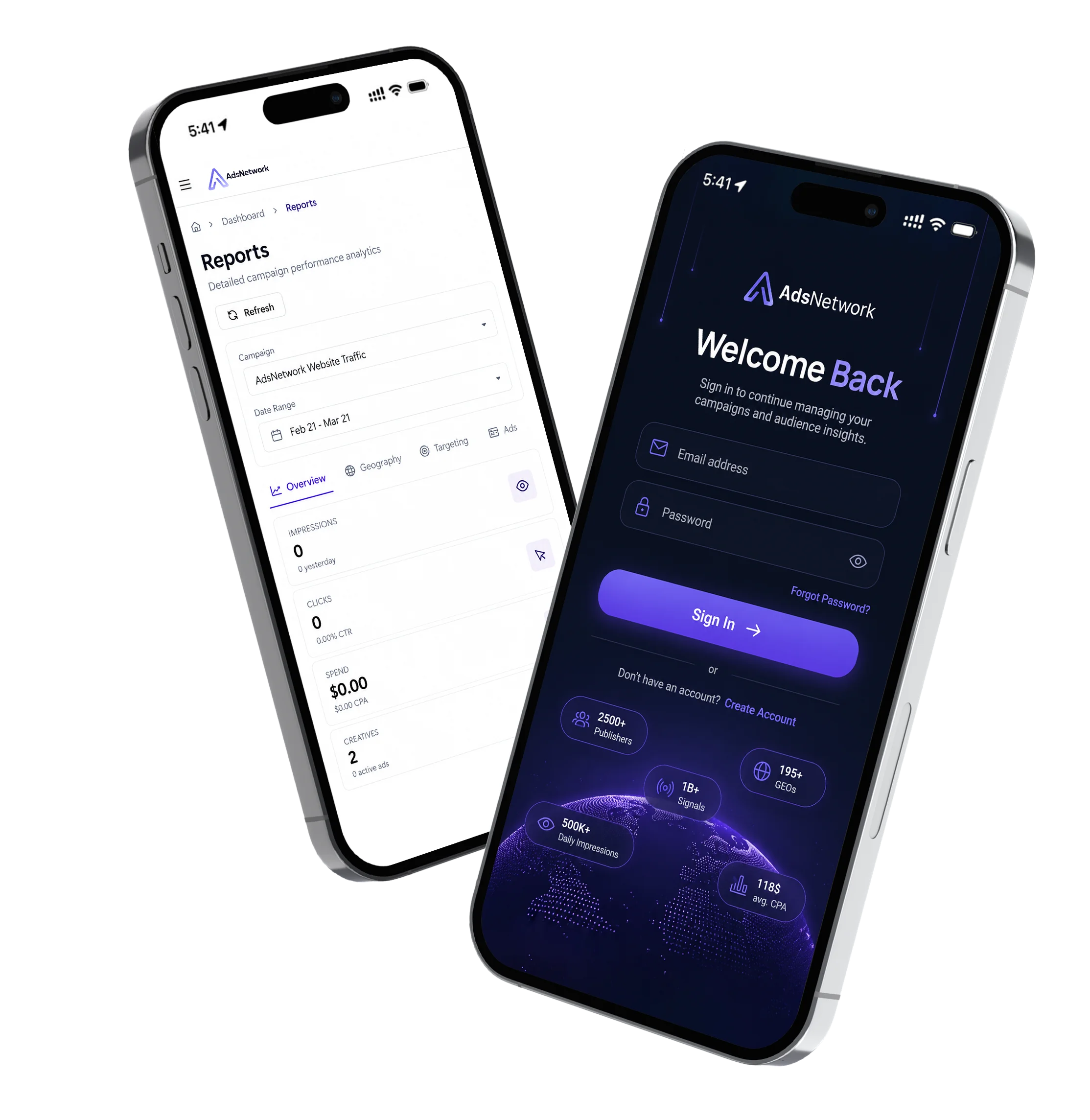
Stay connected to your live AdsNetwork campaigns with our mobile advertising app. Track impressions, clicks, conversions, campaign spend, and overall performance in real time—anytime, anywhere. Available for iOS and Android.