
Media buying is the process of purchasing advertising space to reach a target audience. It includes choosing where ads appear, setting budgets, buying placements and tracking campaign performance.
Ads can be purchased directly from publishers or through platforms such as demand-side platforms (DSPs). These campaigns can include display, native, video, social, search, audio and other advertising channels.
A good media buy is not just about getting the lowest price. Advertisers also need to consider the audience, placement, reach, cost and campaign results.
In this guide, we’ll cover how the process works, the main types of media buying, pricing models, media planning, procurement, negotiation and ways to improve campaign performance.
What Is Media Buying?
Media buying is the process of purchasing advertising inventory to deliver ads to a target audience. Depending on the channel and buying method, advertisers may purchase impressions, clicks, conversions, placements, or a fixed amount of advertising space.
This covers several activities, including:
- Selecting advertising channels and inventory
- Identifying publishers or advertising platforms
- Negotiating prices and placements
- Setting bids and budgets
- Purchasing advertising inventory
- Managing campaign delivery
- Monitoring performance
- Optimising placements and bids
- Measuring campaign results
For example, an advertiser running a native advertising campaign may purchase impressions across a network of publishers. A brand running a sponsorship may negotiate directly with a publisher for a fixed placement and campaign period.
The objective is not simply to buy as much inventory as possible. The goal is to use the available budget to reach the right audience and generate the desired business outcome.
Media Buying vs Media Planning
Media planning and media buying are closely related, but they are not the same activity.
An effective campaign begins with media planning, which determines where, when and why to spend the budget. Media purchasing then puts that plan into action by acquiring the selected inventory.
| Media planning | Media buying |
|---|
| Defines campaign objectives | Purchases advertising inventory |
| Researches the target audience | Negotiates rates and placements |
| Selects channels | Sets bids and budgets |
| Allocates the media budget | Manages campaign delivery |
| Determines timing and frequency | Optimises placements and bids |
| Creates the media plan | Measures and reports buying performance |
A simple way to think about the difference is:
Media planning decides where the budget should go. Media buying puts that budget to work.
The two functions may be handled by different specialists at a large agency, while smaller teams may have one person responsible for both.
What Is Media Planning and Buying?
Planning and buying media are two parts of the same process.
Media planning decides the audience, channels, budget and timing. Media buying involves purchasing the advertising space or inventory.
For example:
- Define the target audience
- Choose the right channels
- Set the budget
- Buy the advertising inventory
- Monitor and optimise the campaign
- Measure the results
Together, media planning and buying help advertisers make better use of their advertising budget.
Types of Media Buying
The process can take several forms depending on the channel and purchasing method.
Direct Media Buying
Direct media buying involves purchasing advertising space directly from a publisher or owner.
Advertisers can negotiate:
- Pricing
- Placement
- Campaign duration
- Impressions
- Sponsorships
It is often used for premium placements and publisher partnerships.
Programmatic Media Buying
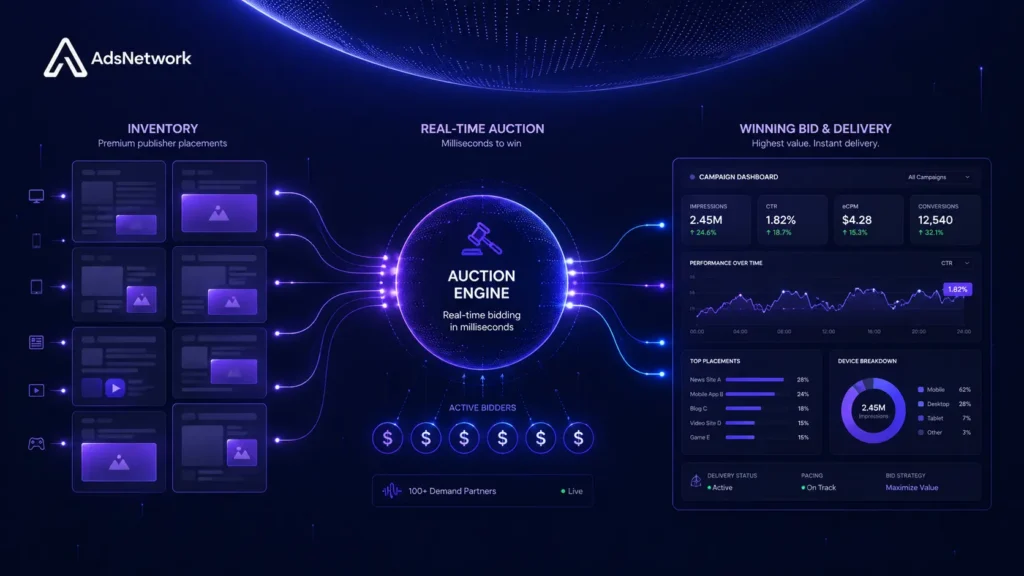
Programmatic media buying uses technology to automate the purchase of digital advertising inventory.
Advertisers can set their:
- Target audience
- Budget
- Bids
- Campaign goals
Programmatic buying provides access to large amounts of inventory and allows campaigns to be adjusted based on performance.
Social Media Buying
Social media buying involves purchasing ads on social platforms.
Advertisers can target audiences based on factors such as:
- Location
- Demographics
- Interests
- Behaviour
- Device
Social media ads can be used for awareness, traffic, leads and conversions.
Search Media Buying
Search media buying involves paying for ads on search engine results pages.
It can help advertisers reach people who are actively searching for a product, service or solution.
Common pricing models include CPC and CPA.
Native Media Buying
Ads can be purchased through native media buying to fit naturally within a publisher’s content or website design.
Native ads can appear in content feeds, recommendation widgets and other placements.
Advertisers can use native media buying to reach relevant audiences while tracking performance and managing their budget.
Programmatic vs Direct Media Buying
The main difference between programmatic and direct buying is how the inventory is purchased.
| Direct buying | Programmatic buying |
|---|---|
| Negotiated directly with a publisher | Purchased through advertising technology |
| Often involves fixed placements | Often uses automated auctions |
| Greater control over specific placements | Greater scale and automation |
| Useful for sponsorships and premium inventory | Useful for scalable campaigns |
| Pricing is negotiated | Pricing can change based on auction conditions |
Neither approach is suitable for every campaign.
Direct buying can make sense when an advertiser wants a specific publisher, placement or sponsorship. Programmatic buying can make sense when an advertiser needs scale, automated bidding or audience-based targeting.
Many advertisers use both.
How Does Media Buying Work?
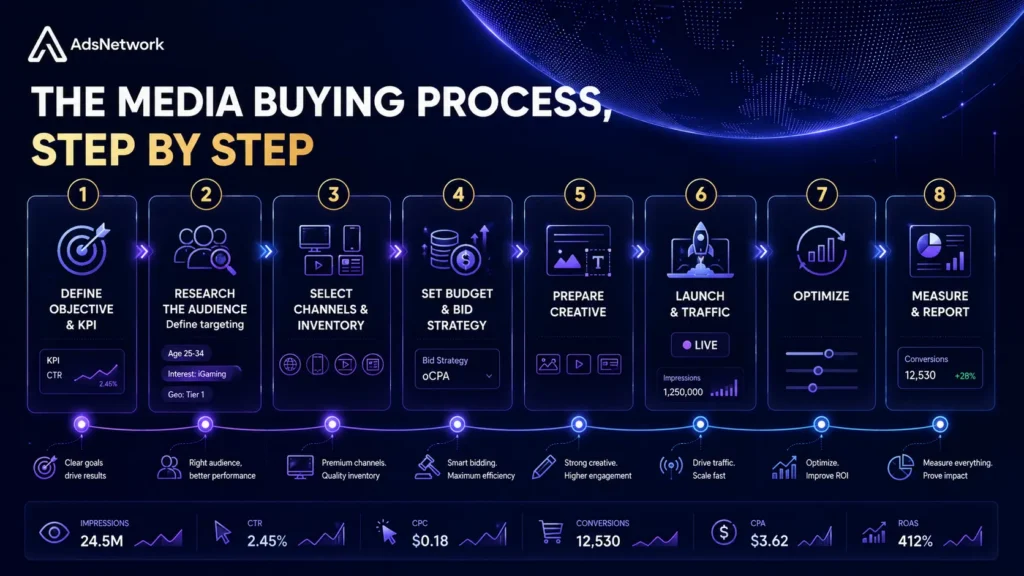
The media buying process usually follows these steps:
1. Define the campaign goal
Decide what you want to achieve, such as:
- Brand awareness
- Website traffic
- Leads
- Sales
- App installs
2. Define your target audience
Identify who you want to reach based on factors such as location, demographics, interests and behaviour.
3. Choose your channels
Choose channels that fit your audience and goal, such as:
- Display ads
- Native
- Search
- Social
- Video
- Audio
- Connected TV
4. Set your media plan
Decide how to split your budget across channels, audiences and campaign periods.
5. Choose your inventory
Find advertising placements that match your audience and budget. Check factors such as:
- Audience
- Placement quality
- Pricing
- Viewability
- Brand safety
6. Negotiate the deal
For direct media buying, negotiate pricing, placements, campaign length and additional inventory.
7. Launch the campaign
Set up your creatives, targeting, tracking, budget and bids, then launch the campaign.
8. Monitor and optimise
Track performance and adjust your bids, budget, placements, audiences or creatives as needed.
9. Measure results
Compare campaign results with your original goal. The right metrics depend on the campaign, such as CPM, CPC, CPL, CPA or ROAS.
Media Buying Pricing Models
Advertisers can pay for media in several ways:
- CPM (cost per thousand impressions): Pay for impressions.
- CPC (cost per click): Pay for clicks.
- CPA (cost per acquisition): Pay for conversions or acquisitions.
- CPL (cost per lead): Pay for leads.
- CPI (cost per install): Pay for app installs.
- Flat-rate or sponsorship: Pay a fixed price for a placement or campaign period.
How Much Does Media Buying Cost?
Media purchasing costs vary based on:
- Channel
- Audience
- Location
- Inventory
- Competition
- Targeting
- Campaign duration
- Buying model
Other costs may include agency, platform, data and ad-serving fees.
Media Procurement and Media Buying
Media purchasing focuses on purchasing and managing advertising inventory. Media procurement focuses on the commercial side of media spend.
Media procurement can include:
- Choosing agencies and suppliers
- Negotiating contracts
- Reviewing fees
- Managing supplier relationships
- Evaluating costs
- Improving transparency
Media Buying Transparency
Advertisers should know where their ads appear and how their media budget is being spent.
Key areas to review include:
- Ad placements
- Media costs
- Platform and supplier fees
- Inventory quality
- Campaign performance
Supply-path transparency can also help advertisers identify inefficient routes to inventory.
Media Buying Platforms
Media purchasing platforms help advertisers purchase and manage advertising inventory.
Common types include:
Demand-Side Platforms
DSPs are used for programmatic buying, including targeting, bidding and budget management.
Social Advertising Platforms
These platforms allow advertisers to manage campaigns, audiences and reporting on social networks.
Search Advertising Platforms
Search platforms allow advertisers to buy sponsored placements based on search queries and audience signals.
Ad Networks
Ad networks connect advertisers with inventory from multiple publishers through a single platform.
The right platform depends on your campaign goal, audience, budget and targeting needs.
| Ready to start buying media across crypto, iGaming, and finance?Get Access → |
Media Buying KPIs
The most appropriate KPI depends on the campaign objective.
| Campaign objective | Useful metrics |
|---|---|
| Brand awareness | Reach, impressions, CPM, frequency |
| Website traffic | Clicks, CPC, CTR |
| Lead generation | Leads, CPL, conversion rate |
| App acquisition | Installs, CPI, conversion rate |
| Sales | CPA, ROAS, revenue |
| Video | Views, completion rate, CPV |
Advertisers should focus on metrics that support their main campaign goal. High clicks, for example, do not always mean more sales or leads.
Media Buying Strategy: How to Improve Campaign Performance
A good strategy starts with the campaign goal and uses data to improve results.
Match the buying model to the goal
Choose a pricing model that fits what you want to achieve.
Allocate budget based on performance
Put more budget into channels and placements that perform well.
Test different options
Test different creatives, audiences, placements and channels to see what works best.
Monitor your budget
Keep track of how quickly your budget is being spent and adjust it when needed.
Manage frequency
Avoid showing the same ad to the same users too often.
Check inventory quality
Look at more than the price. Consider audience relevance, viewability and performance.
Review performance regularly
Use campaign data to find weak placements and improve your results.
Final Thoughts
Effective media buying is about more than finding the lowest price. It means choosing the right audience, channels and inventory while managing your budget and tracking results.
Direct buying can give advertisers more control over specific placements, while programmatic buying can offer greater scale and automation.
The key is simple: choose the right inventory, manage your budget and use performance data to improve your campaigns.
| Put disciplined media buying to work on your next campaign.Get Access → |
Featured Posts
Oct 23, 2026
10 min read
What Is CPM in Advertising? Meaning, Formula and 2026 Rates
CPM is the cost an advertiser pays for 1,000 ad impressions, making it one of the most common…
Read Article
Sep 23, 2026
6 min read
What Is Advertising Technology (AdTech) and How Does It Work?
Advertising technology, commonly known as AdTech, refers to the software, platforms, tools, and systems used to plan, buy,…
Read Article
Sep 7, 2026
8 min read
Programmatic Advertising vs Display Advertising: What’s the Difference?
Programmatic and display advertising are often used interchangeably, but they describe two different parts of digital advertising. Display…
Read ArticleNeed Help?
Our team is ready to help you launch successful campaigns.
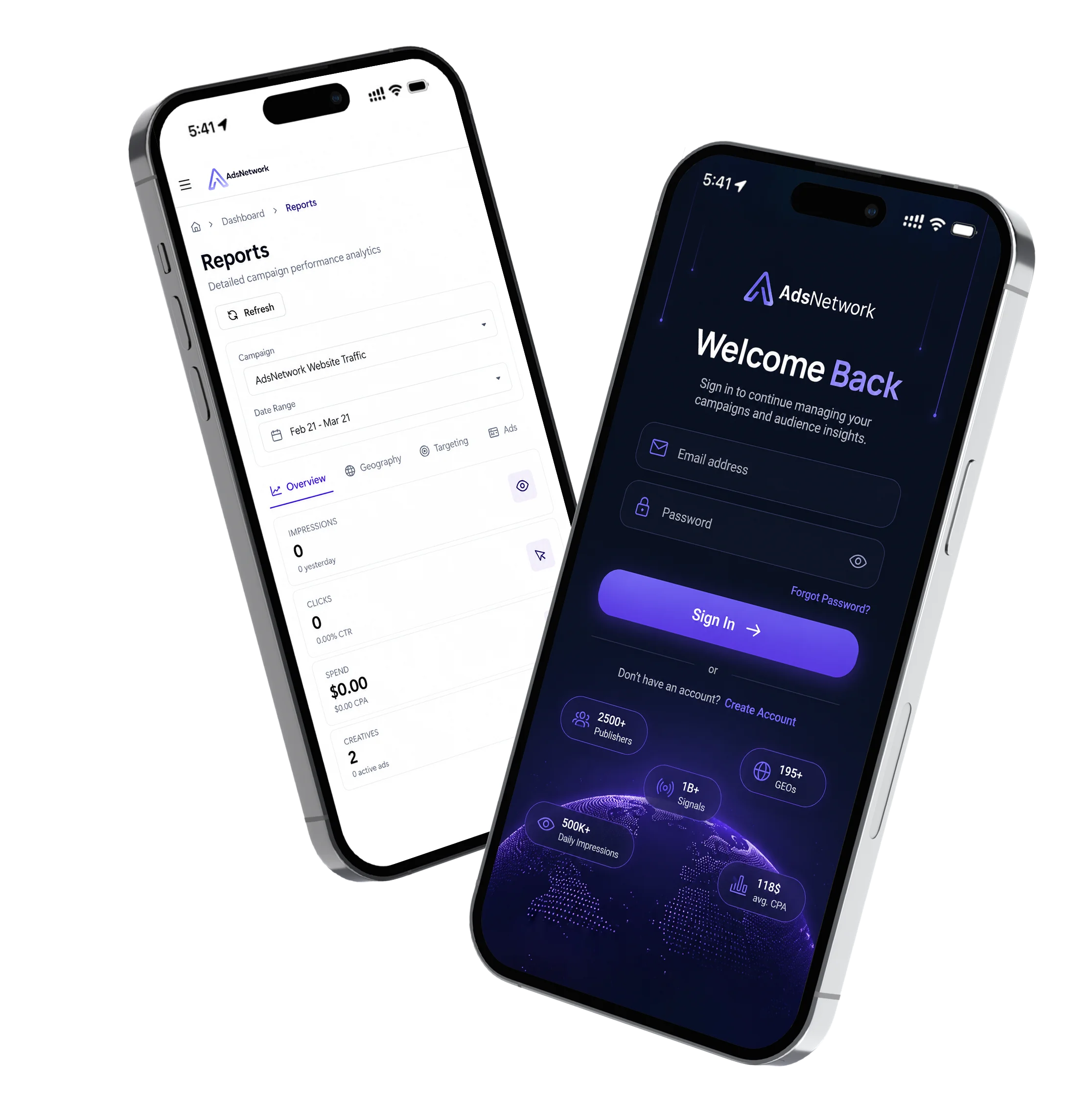
AI-Powered Mobile
Monitor Your Campaigns Anywhere
Stay connected to your live AdsNetwork campaigns with our mobile advertising app. Track impressions, clicks, conversions, campaign spend, and overall performance in real time—anytime, anywhere. Available for iOS and Android.