
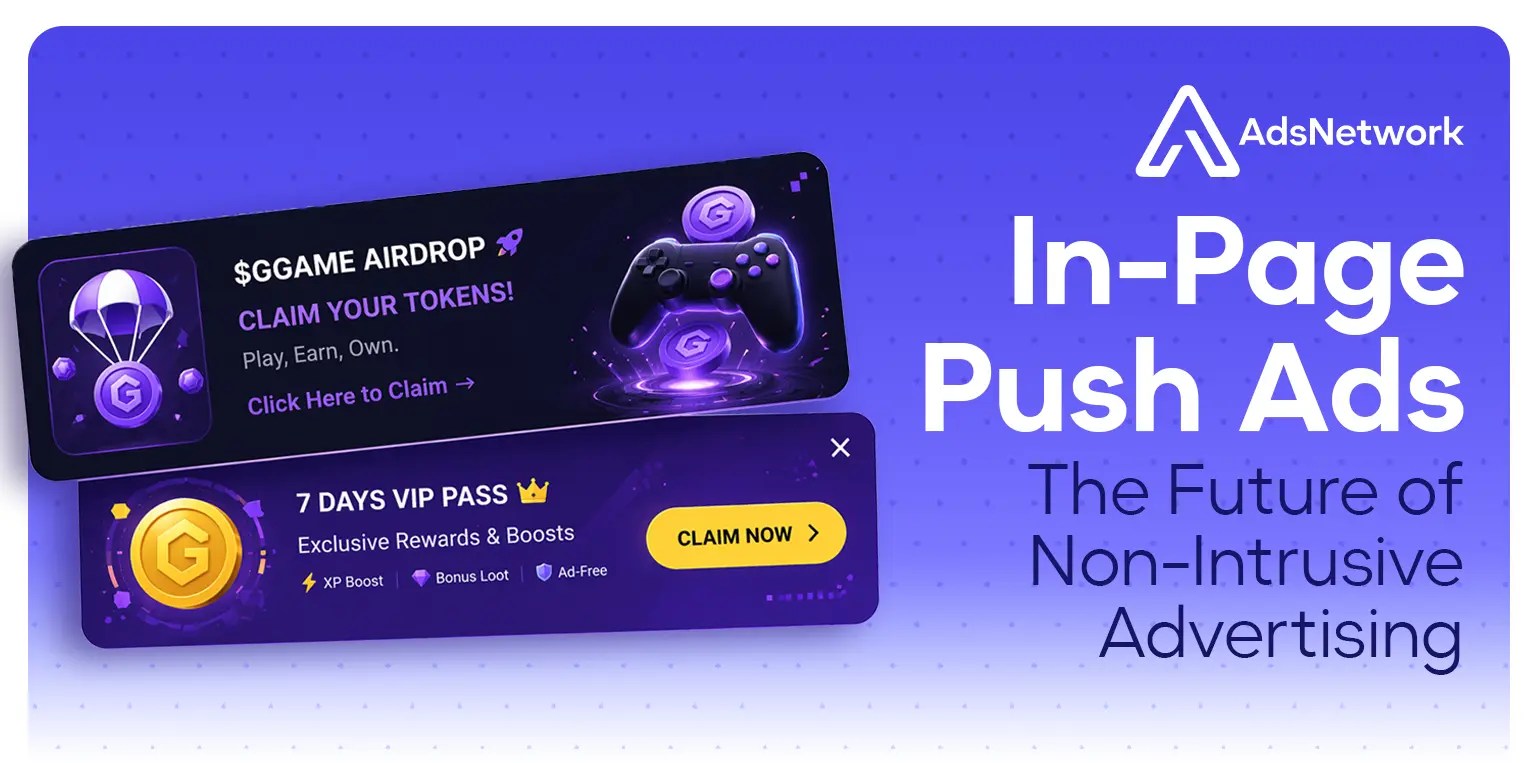
Banner ads get ignored. Pop-ups get blocked. Traditional push notifications cannot reach iOS users at all. In-page push ads solve all three problems at once. They look like trusted system notifications and appear directly on the publisher’s page. No subscription is required. The format works seamlessly across every device and browser, including iPhones and iPads.
The result is a non-intrusive format that captures attention without disrupting the browsing experience. In 2026, in-page push ads are one of the fastest-growing formats in performance marketing. According to Adsterra, this format overcomes banner blindness by displaying ads in a familiar, notification-style design that users instinctively trust. This guide explains how these ads work, why they outperform traditional formats, and how to build campaigns that convert across every device and market.
What Are In-Page Push Ads?
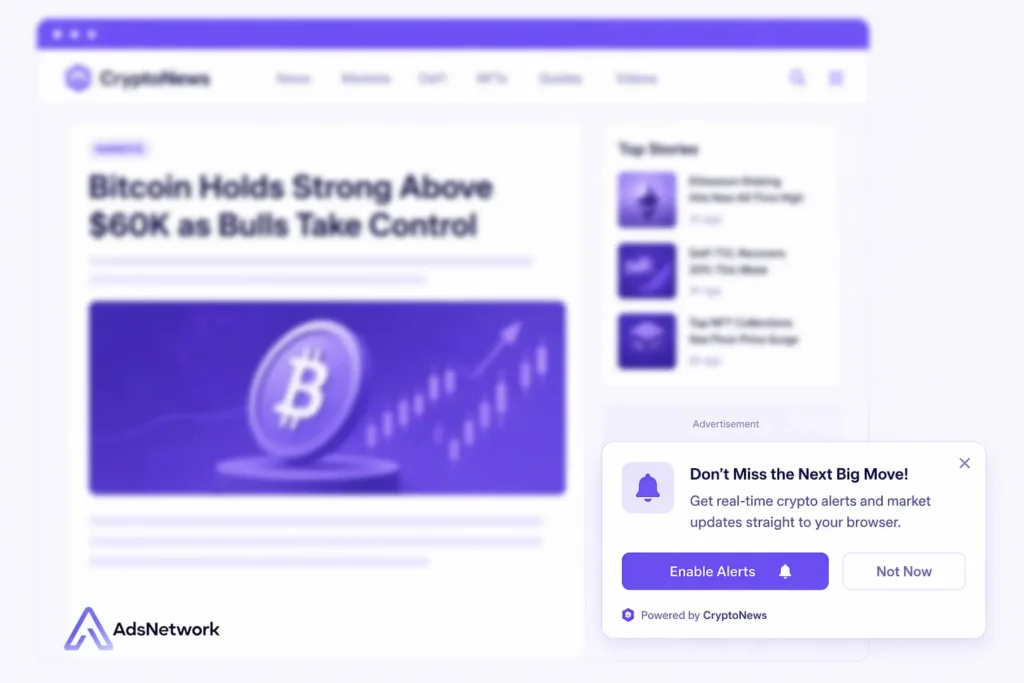
In-page push ads are display advertisements designed to look and behave like native push notifications. They appear directly on a publisher’s website as small notification-style widgets, typically in the corner or edge of the screen. According to RichAds, these ads are essentially banners that mimic the visual style of system push notifications, giving them a familiar and trustworthy appearance.
The critical distinction from traditional push notifications is that in-page push ads do not require user subscription. Classic web push notifications need explicit opt-in consent before they can be delivered. In-page push bypasses this requirement entirely. As a result, every visitor to the publisher’s site can see the ad, regardless of whether they have subscribed to anything.
Moreover, the format works on all devices and operating systems. Traditional push notifications cannot reach iOS users because Apple restricts browser-level notification subscriptions. In-page push ads solve this limitation completely, opening up the entire Apple audience to advertisers. According to Adsterra, this cross-device compatibility is the format’s single biggest advantage over classic push.
What Are In-Page Push Ads?
In-page push ads are display advertisements designed to look and behave like native push notifications. They appear directly on a publisher’s website as small notification-style widgets, typically in the corner or edge of the screen. According to RichAds, these ads mimic the visual style of system push notifications, giving them a familiar and trustworthy appearance.
The critical distinction from traditional push notifications is that in-page push ads do not require user subscription. Classic web push notifications need explicit opt-in consent before they can be delivered. In-page push bypasses this requirement entirely. As a result, every visitor to the publisher’s site can see the ad, regardless of whether they have subscribed to anything.
Moreover, the format works on all devices and operating systems. Traditional push notifications cannot reach iOS users because Apple restricts browser-level notification subscriptions. In-page push solves this limitation completely, opening the entire Apple audience to advertisers. According to Adsterra, this cross-device compatibility is the format’s single biggest advantage over classic push. In particular, this iOS reach unlocks a premium audience segment that many ad formats simply cannot access.
How In-Page Push Ads Work
The technical process is straightforward. Publishers install a small piece of code on their website that generates the notification-style ad unit. When a visitor arrives on the page, the ad appears as a widget that looks like a system notification. According to Push.House, these notifications can be styled to match specific platforms, including iOS, Android, Windows, and even Telegram or WhatsApp interfaces.
CPC is the most common pricing model, though CPM and CPA options are also available. Advertisers create campaigns through ad networks, select targeting parameters such as geography, device type, and operating system, and bid for placements. The ads are then served to matching audiences across the network’s publisher inventory. Because the format is lightweight and loads quickly, it does not impact page speed or SEO performance for publishers. This makes it viable even for publishers with strict Core Web Vitals requirements.
Why In-Page Push Ads Outperform Traditional Formats
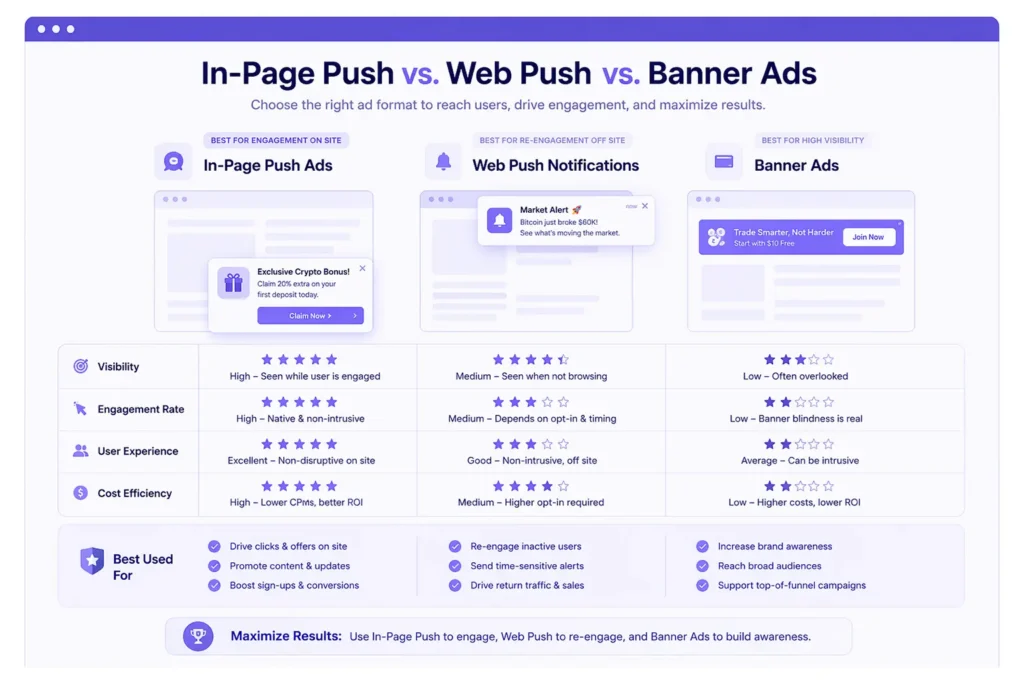
In-page push ads combine the best elements of multiple formats while avoiding their weaknesses. Below are the key advantages that make them one of the most effective options for performance marketers in 2026.
Universal Device Reach, Including iOS
Traditional push notifications exclude the entire iOS ecosystem. In-page push eliminates this barrier. According to RichAds, iOS in-page push finally made it possible to reach Apple device users with push-style advertising. This matters because iOS users represent a large share of high-value, high-spending audiences globally. No subscription prompt, no Apple restriction, no lost impressions.
Non-Intrusive User Experience
Unlike pop-ups that interrupt browsing or interstitials that block content, in-page push ads blend naturally into the page. They appear as familiar notification elements that users recognize and trust. According to Push.House, this native-like appearance drives higher CTR. Users are more likely to interact with something that looks like a legitimate notification than with a standard display banner. Consequently, the format is particularly effective at capturing attention during content consumption rather than interrupting it.
No Subscription Required, Broader Reach
Classic push notifications reach only users who have opted in. In-page push ads reach every visitor to the publisher’s site. Consequently, the potential audience is dramatically larger. This broader reach makes in-page push especially valuable for campaigns that prioritize volume and testing speed. According to RichAds, in-page push campaigns can deliver a 1.5x increase in conversion rate when using premium traffic sources.
Strong Ad Blocker Resistance
Because in-page push ads are rendered as standard web elements rather than traditional ad units, they bypass many common ad-blocking tools. Additionally, the ads generate fresh impressions with every page visit rather than relying on stored subscription lists. This means the audience pool refreshes continuously, which maintains reach even as ad blocker adoption grows. Furthermore, because the format does not rely on third-party cookies or subscription databases, it is structurally more privacy-resilient than conventional push and cookie-dependent retargeting.
In-Page Push Ads Performance Benchmarks
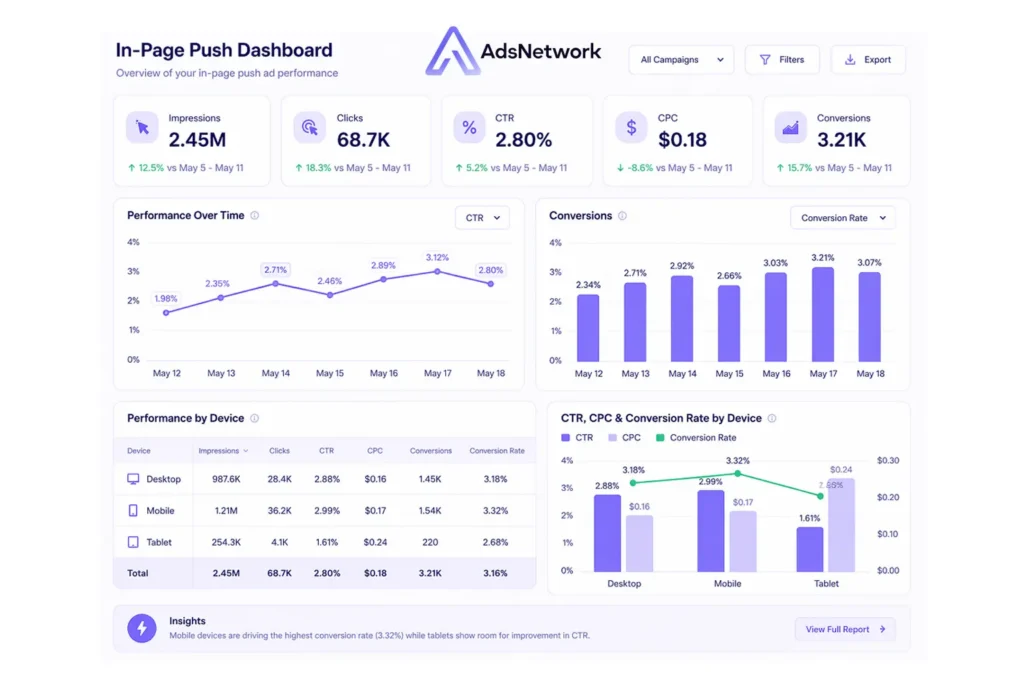
Understanding performance benchmarks is essential before launching campaigns. Here are the key metrics advertisers should track.
In-page push ads typically achieve higher CTRs than standard display banners because their notification-style design catches attention without feeling intrusive. According to Push.House, the format boosts CTR and conversion rates through personalized notification templates that match familiar platform interfaces. CPC rates for in-page push start as low as $0.001, making the format one of the most cost-effective options for testing and scaling campaigns. Furthermore, the low entry cost makes it practical to run simultaneous tests across multiple creatives and audiences without exhausting budget.
According to Epom, push ads including in-page variations will be among the most cost-effective advertising formats by the end of 2026. The mobile advertising market reached $262.84 billion in 2025 and is projected to hit $322.67 billion by end of 2026. As a result, that scale provides the volume in-page push campaigns need to optimize quickly and find their best-performing placements.
Creative Best Practices for In-Page Push Ads
Creative quality directly determines whether your campaigns succeed or fail. The notification-style format only works when it feels authentic and relevant. Here is what the data shows works best.
Match the Notification Template to the Target Platform
If you are targeting iOS users, use an iOS-styled notification template. If you are targeting Android users, match that design instead. According to Push.House, personalized templates that mimic familiar platform interfaces drive significantly more interactions than generic designs. Mismatched templates break the illusion and reduce trust, which kills CTR before the copy has a chance to work.
Keep Copy Concise and Action-Oriented
In-page push ads have limited text space, similar to a real notification. Use clear, direct language with a strong benefit statement and a single call to action. Additionally, test multiple icon images. The small square icon is often the first visual element users notice and can dramatically impact CTR. Short, urgent copy with a specific offer consistently outperforms vague brand messaging.
Localize for Each Target Market
Even though in-page push allows precise geographic targeting, generic English-language copy will underperform in non-English markets. Therefore, translate your ad text and adapt your messaging to local audience preferences for each segment you target. Localization is not optional for campaigns scaling across multiple geographies. Furthermore, cultural context affects which urgency triggers and benefit statements resonate most strongly.
In-Page Push Ads for Crypto and Web3 Projects
Crypto projects need ad formats that reach engaged audiences without relying on platforms that restrict blockchain advertising. In-page push fits this requirement precisely. The format operates through ad networks that welcome crypto advertisers, bypassing the policy barriers imposed by Google and Meta. Specifically, there are no pre-approval processes, no blanket category restrictions, and no compliance hoops that derail campaign launches.
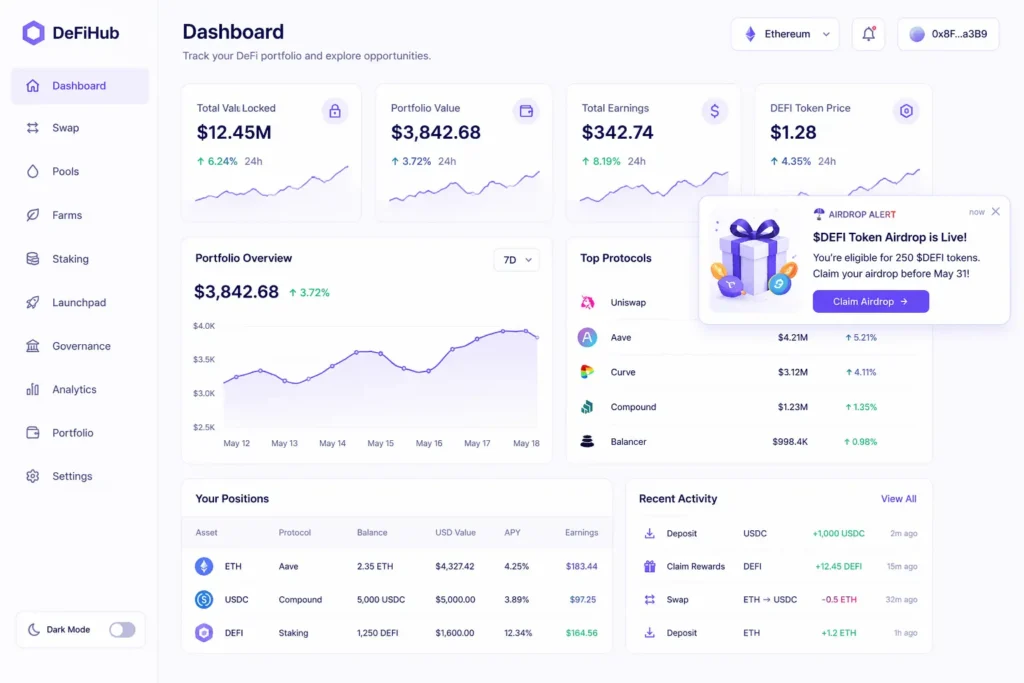
The notification-style design is especially effective for time-sensitive crypto campaigns. Token launches, airdrop announcements, and staking reward alerts all benefit from the urgency that a notification format naturally creates. Because in-page push ads look like system messages, they carry an inherent sense of immediacy that standard banners lack. For campaigns where timing matters, this urgency advantage is significant.
Moreover, the format’s ability to reach iOS users is particularly valuable for crypto projects. Apple device owners tend to have higher spending power, making them a premium audience segment for DeFi protocols and exchange platforms. Traditional push notifications cannot reach this audience at all. In-page push delivers full coverage across every Apple device. Consequently, advertisers who have been missing the iOS audience in their push campaigns can recover that reach immediately.
| Ready to run in-page push campaigns? Explore AdsNetwork’s in-page push ad solutions and start reaching all devices, including iOS, with notification-style placements that convert. |
In-Page Push Ads: The Reach Advantage in 2026
In-page push ads represent a fundamental shift in how advertisers reach audiences online. They combine the trust and familiarity of push notifications with the universal reach of display advertising. No subscription is required. Ad blockers do not stop them. iOS users receive them. The browsing experience is not disrupted. Consequently, the format delivers four advantages simultaneously that most formats cannot even address individually.
For crypto and Web3 projects, in-page push provides a compliant, high-performing channel outside the restrictions of mainstream ad platforms. Whether you are promoting a token launch, announcing an airdrop, or driving wallet downloads, this format delivers the reach and engagement that traditional advertising cannot match. Start running campaigns today at AdsNetwork In-page Push.
Featured Posts
Oct 23, 2026
10 min read
What Is CPM in Advertising? Meaning, Formula and 2026 Rates
CPM is the cost an advertiser pays for 1,000 ad impressions, making it one of the most common…
Read Article
Sep 23, 2026
6 min read
What Is Advertising Technology (AdTech) and How Does It Work?
Advertising technology, commonly known as AdTech, refers to the software, platforms, tools, and systems used to plan, buy,…
Read Article
Sep 16, 2026
8 min read
Media Buying: A Complete Guide for Advertisers
Media buying is the process of purchasing advertising space to reach a target audience. It includes choosing where…
Read ArticleNeed Help?
Our team is ready to help you launch successful campaigns.
AI-Powered Mobile
Monitor Your Campaigns Anywhere
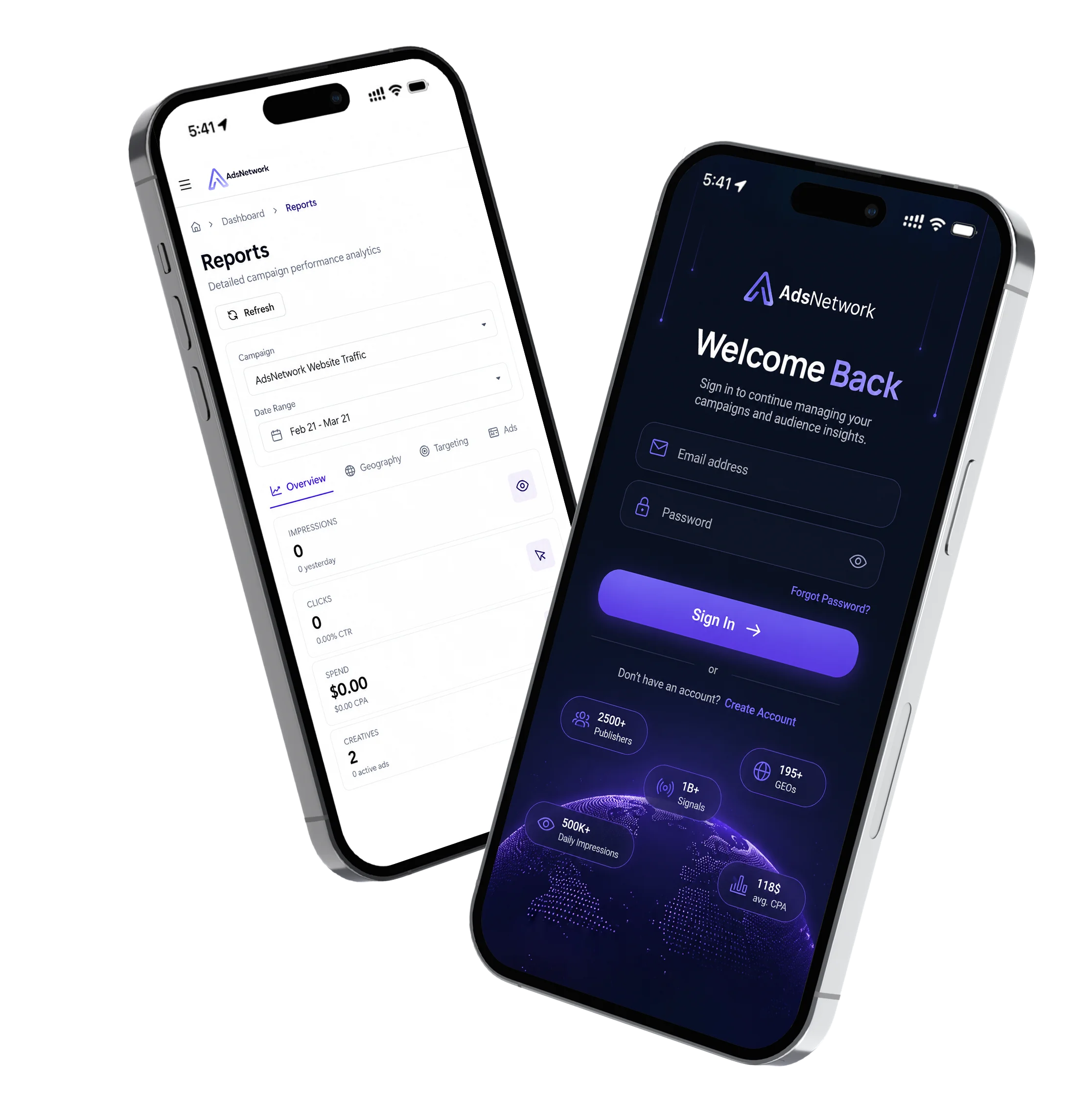
Stay connected to your live AdsNetwork campaigns with our mobile advertising app. Track impressions, clicks, conversions, campaign spend, and overall performance in real time—anytime, anywhere. Available for iOS and Android.