
Display advertising is a form of digital advertising that uses visual ads to promote a brand, product, service, or offer. Display ads can appear on websites and apps in formats such as banners, images, HTML5 ads, rich media, and video.
Unlike search advertising, which reaches people when they actively search for something, display advertising reaches users while they browse. This makes it useful for building brand awareness, reaching new audiences, promoting products, and retargeting previous website visitors.
In this guide, we’ll cover the main types of display ads, common sizes, targeting options, costs, benefits, and best practices.
What Is Display Advertising?
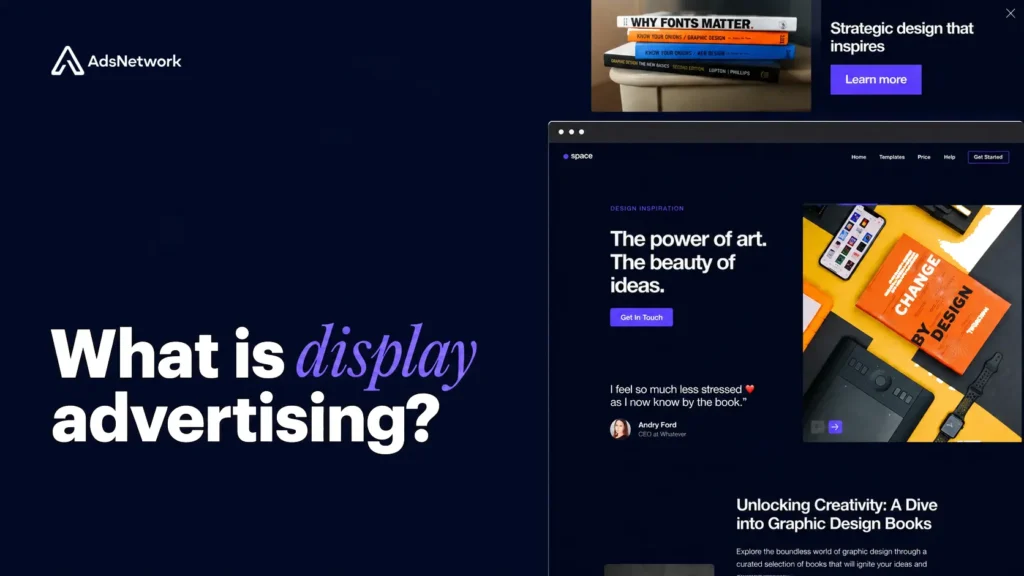
Display advertising is online advertising that uses visual creatives to reach audiences across websites and apps.
A display ad could be a display banner at the top of a webpage, a rectangle within an article, a large sidebar placement, or an interactive creative.
Display advertising can serve different purposes throughout the customer journey. Advertisers can use it to introduce their brand to new audiences, promote a product, drive website traffic, or reconnect with people who have previously visited their site.
Display Advertising Examples
Common examples include:
- A retargeting ad shown after someone visits a product page
- A 300 × 250 banner inside a news article
- A 728 × 90 leaderboard at the top of a website
- A 300 × 600 sidebar advertisement
- An animated HTML5 banner
- An interactive rich media ad
- A mobile banner displayed in an app
Types of Display Ads
Display advertising includes several formats, each suited to different campaigns and creative requirements.
Banner Ads
Banner ads are rectangular visual advertisements placed within designated advertising spaces on websites and apps. They can be static or animated and are among the most common display formats.
HTML5 Ads
HTML5 ads use animation and interactive elements rather than a single static image. They can be useful for product demonstrations, promotions, and campaigns that require more creative flexibility.
Rich Media Ads
Rich media ads include interactive features such as animation, video, expandable elements, or other interactive components. They can provide more engagement opportunities than standard banners.
Responsive Display Ads
Responsive display ads automatically adapt their size and appearance to available advertising space. Advertisers provide assets such as images, headlines, logos, and descriptions, and the platform combines them into different layouts.
Video Display Ads
A video ad can also be used within display advertising placements. Video ads can help advertisers communicate products, services, or brand messages through motion rather than static imagery.
Common Display Ad Sizes
Display advertising uses a range of standard dimensions designed to fit commonly available placements. Some of the most widely used sizes include:
| Size | Common name | Typical placement |
|---|---|---|
| 300 × 250 | Medium Rectangle | In-content and sidebar |
| 336 × 280 | Large Rectangle | In-content |
| 728 × 90 | Leaderboard | Desktop header |
| 300 × 600 | Half Page | Desktop sidebar |
| 160 × 600 | Wide Skyscraper | Vertical sidebar |
| 320 × 50 | Mobile Banner | Mobile |
| 320 × 100 | Large Mobile Banner | Mobile |
The exact sizes available depend on the publisher, advertising network, or platform.
Using several common sizes can give advertisers access to more inventory across desktop and mobile placements.
How Does Display Advertising Work?
A display advertising campaign generally involves five steps.
1. Define the Campaign Goal
Start by deciding what you want the campaign to achieve.
Common goals include:
- Brand awareness
- Website traffic
- Lead generation
- Product promotion
- Retargeting
- Conversions
Your objective should determine how you approach targeting, creative, and measurement.
2. Choose Your Audience
Next, define who you want to reach.
Depending on the advertising platform, you may be able to target audiences based on factors such as location, interests, behaviour, context, device, or previous interactions with your website.
3. Create Your Ads
Create your display creatives in the required formats and sizes.
Keep the message simple and make the main value proposition easy to understand. Your branding and call to action should also be clear.
4. Choose Your Inventory
Display inventory can be purchased through advertising platforms, networks, or directly from publishers.
You can also purchase display inventory programmatically, using automated technology to select and bid on impressions based on your campaign settings.
Programmatic is a buying method, while display is an advertising format. A display ad can therefore be purchased programmatically.
For a detailed explanation of the difference, see our guide to programmatic vs display advertising.
5. Monitor and Optimise
Once your campaign is running, monitor performance and adjust your targeting, creative, placements, bids, or budget based on the results.
Display Advertising Targeting
Targeting helps advertisers reach audiences that are more relevant to their campaigns.
Contextual Targeting
Contextual targeting places ads alongside content related to a particular topic.
For example, a cryptocurrency company might target webpages about blockchain, digital assets, or crypto markets.
Demographic Targeting
Demographic targeting can use characteristics such as age or gender when those signals are available on the advertising platform.
Geographic Targeting
Geographic targeting allows advertisers to focus campaigns on specific countries, regions, cities, or other locations.
Interest and Behavioural Targeting
These methods use signals about users’ interests or online behaviour to identify potentially relevant audiences.
Retargeting
Retargeting allows advertisers to reach people who have previously interacted with a website, app, or brand.
For example, someone who views a product page without purchasing may later see an advertisement for that product while browsing another website.
How Much Does Display Advertising Cost?
There is no fixed price for display advertising. Costs depend on factors such as the audience, market, placement, format, publisher, competition, and buying method.
Common pricing models include:
- CPM: Cost per thousand impressions. The advertiser pays based on the number of times the ad is displayed.
- CPC: Cost per click. The advertiser pays when someone clicks the ad.
- CPA: Cost per acquisition or action. The cost is tied to a defined conversion or action.
For awareness campaigns, CPM is common. Campaigns focused on traffic may use CPC, while conversion-focused campaigns may use CPA where available.
The cheapest inventory is not necessarily the most valuable. Advertisers should consider the quality and relevance of the audience as well as the resulting business outcomes.
Benefits of Display Advertising
Display advertising offers several advantages for brands looking to reach new audiences, build awareness, and support conversions across the customer journey.
- Broad reach: Reach audiences across a large number of websites and apps.
- Visual communication: Use images, animation, HTML5, rich media, and video to communicate your message.
- Audience targeting: Reach relevant users based on factors such as context, location, demographics, interests, and behaviour.
- Retargeting: Reconnect with people who have previously visited your website or interacted with your brand.
- Brand awareness: Introduce your brand to potential customers before they actively search for your product or service.
- Measurable performance: Track impressions, reach, clicks, CTR, viewability, conversions, CPA, and revenue.
Together, these features make display advertising a flexible channel for reaching audiences, increasing brand visibility, and supporting broader digital marketing goals
| Ready to run display advertising across crypto, iGaming, and finance inventory? Get Access → |
How to Measure Display Advertising
The right metrics depend on your campaign objective.
For awareness campaigns, monitor:
- Impressions
- Reach
- Frequency
- CPM
- Viewability
When talking about traffic campaigns, monitor:
- Clicks
- CTR
- CPC
- Landing-page engagement
As for conversion campaigns, monitor:
- Conversions
- Conversion rate
- CPA
- Revenue
- ROAS
CTR can be useful, but it should not be the only metric used to evaluate display advertising. A campaign can generate value through awareness, consideration, and conversions without producing a high volume of clicks.
Conclusion
Display advertising gives brands a flexible way to reach audiences across websites and apps using visual formats such as banners, HTML5, rich media, and video. With the right targeting, creative, placements, and measurement strategy, it can support everything from brand awareness and audience growth to retargeting and conversions.
The key is to match your display strategy to your campaign goals and evaluate performance using the metrics that matter for those goals. When used alongside other digital advertising channels, display can help brands build visibility, reach relevant audiences, and stay connected with potential customers throughout the buying journey.
Frequently Asked Questions
What is display advertising?
Display advertising is a form of digital advertising that uses visual formats such as banners, images, HTML5, rich media, and video to promote brands, products, or services across websites and apps.
What are examples of display advertising?
Examples include banner ads, HTML5 ads, rich media ads, responsive display ads, video ads, and retargeting ads.
What are the most common display ad sizes?
Common display ad sizes include 300 × 250, 336 × 280, 728 × 90, 300 × 600, 160 × 600, 320 × 50, and 320 × 100 pixels.
| Put display advertising to work with placement-level transparency.Get Access → |
Featured Posts

Sep 23, 2026
6 min read
What Is Advertising Technology (AdTech) and How Does It Work?
Advertising technology, commonly known as AdTech, refers to the software, platforms, tools, and systems used to plan, buy,…
Read Article
Sep 16, 2026
8 min read
Media Buying: A Complete Guide for Advertisers
Media buying is the process of purchasing advertising space to reach a target audience. It includes choosing where…
Read Article
Sep 7, 2026
8 min read
Programmatic Advertising vs Display Advertising: What’s the Difference?
Programmatic and display advertising are often used interchangeably, but they describe two different parts of digital advertising. Display…
Read ArticleNeed Help?
Our team is ready to help you launch successful campaigns.
AI-Powered Mobile
Monitor Your Campaigns Anywhere
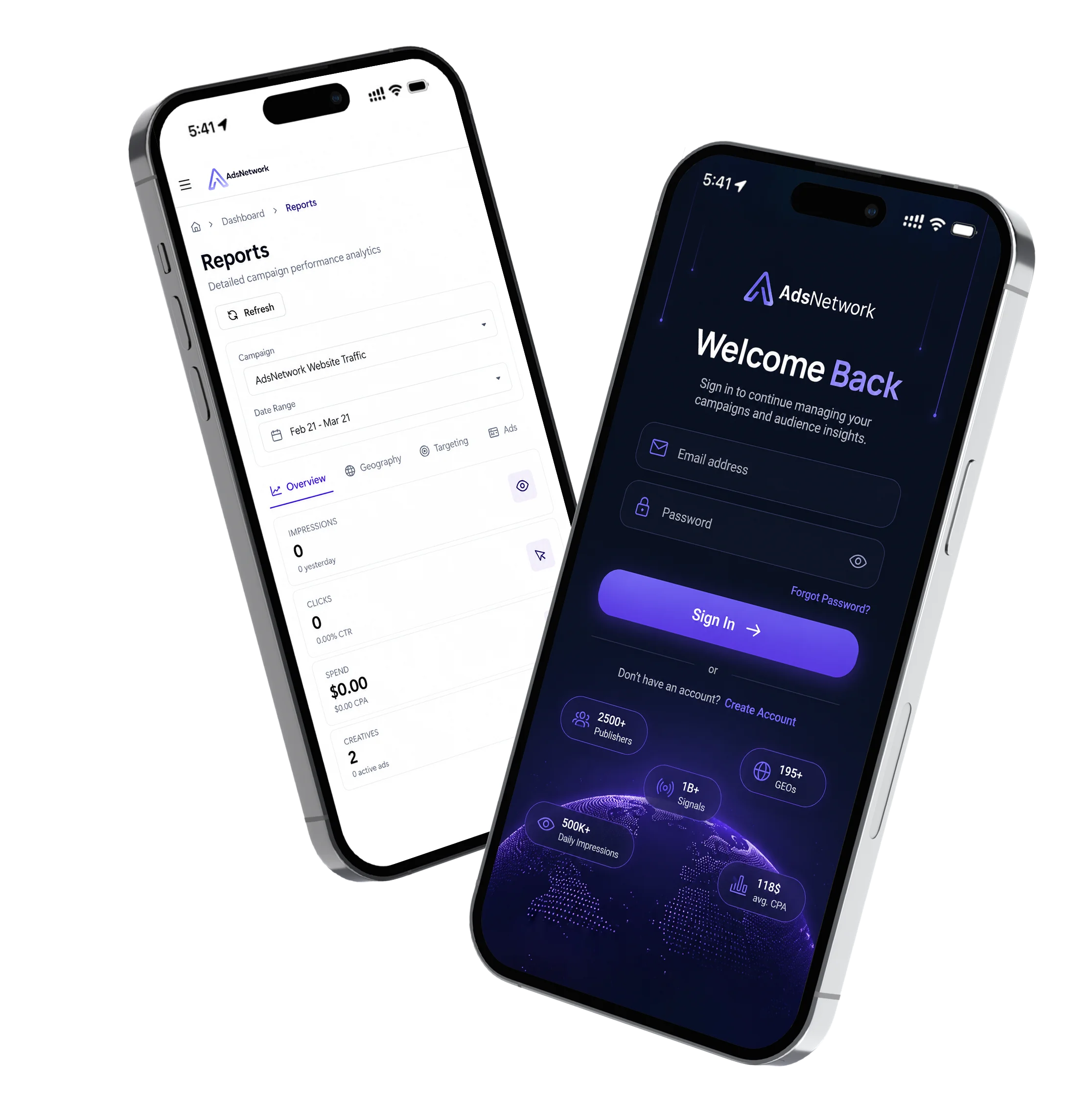
Stay connected to your live AdsNetwork campaigns with our mobile advertising app. Track impressions, clicks, conversions, campaign spend, and overall performance in real time—anytime, anywhere. Available for iOS and Android.