
Learning how to market a crypto project is harder than it looks, and the reason is simple. Crypto marketing is not traditional marketing with a blockchain logo on top. It runs on a different set of rules: skeptical audiences, fragmented regulation, platform ad bans, and a community culture that punishes anything that feels fake.
The stakes are high. For example, over 18,000 tokens trade across hundreds of exchanges, yet most fade into irrelevance within months of launch. The projects that survive rarely have better technology. Instead, they have better marketing. Specifically, they build trust, grow real communities, and reach the right users through channels that mainstream platforms cannot serve.
This guide breaks down exactly how to market a crypto project in 2026. You will learn why crypto marketing is different, how to build a step-by-step strategy, which channels actually convert, and how to measure what matters. Every section is backed by real data and examples from projects that got it right.
Why Crypto Marketing Is Different
The crypto audience is not a general consumer base. Around 34% of crypto holders are aged 25 to 34, predominantly male, technically literate, and active across X, Discord, Telegram, and Reddit. Furthermore, they verify claims before investing and distrust polished brand campaigns. They reward projects that show substance over hype.
This audience also operates in a regulatory minefield. Google and Meta enforce strict crypto ad guidelines. Meanwhile, the EU’s MiCA framework, the SEC’s evolving posture, and country-specific laws create compliance hurdles that can shut down campaigns overnight. Add years of rug pulls and exit scams, and you understand why every message in crypto marketing must earn its credibility.
Understanding these dynamics is the first step. The framework below turns that understanding into a practical plan you can execute.
It also helps to know what has changed recently. In 2026, hype cycles alone no longer carry projects the way they once did. Instead, audiences expect evidence, research-backed messaging, and consistent communication over time. Token-gated communities, where holders unlock governance rights and early features, have become a defining trend. As a result, the most effective campaigns are built around genuine utility and ownership rather than short bursts of attention.
How to Market a Crypto Project: A Step-by-Step Framework
A strong crypto project marketing strategy is a system, not a single campaign. Specifically, the following steps give a crypto project team a clear sequence to plan and execute. Work through them in order, because each step builds on the one before it.
- Define your value proposition. Before spending a dollar, answer three questions: what problem you solve, how you solve it differently, and why people should trust your team. If you cannot state this in one sentence, your audience will not either.
- Build community before hype. Set up your Discord, Telegram, and X presence early. Engage daily, answer questions, and share progress. A real community is the foundation, not a channel you bolt on later.
- Create educational content. Publish tutorials, explainers, and transparent updates that answer the questions your audience actually searches. Content compounds over time and captures organic traffic.
- Partner with the right voices. Identify KOLs and smaller niche creators whose audiences match your project. Prioritize alignment and authenticity over raw follower count.
- Launch paid campaigns. Once your messaging is validated, add paid crypto advertising to scale reach. Segment audiences by on-chain behavior rather than broad labels.
- Measure and iterate. Track wallet growth, acquisition cost, and engagement quality. Review weekly and reallocate budget toward what converts.
Each step deserves a closer look. The sections below break down the tactics that make this framework work.
Start with a Clear Value Proposition
Your Unique Value Proposition drives everything, from landing page copy to AMA talking points. Specifically, it should be sharp enough to repeat in a single sentence. Therefore, nail this before you spend on promotion, because no amount of paid reach fixes a message that nobody understands.
Build Community Before You Build Hype
In Web3, community is the foundation. For example, Arbitrum and Blur both scaled through participation-based campaigns with minimal paid spend. The pattern is consistent: projects that build real communities outperform those that buy attention. Moreover, each platform plays a different role in your stack.
- Discord: structured long-form engagement, governance, and announcements.
- Telegram: fast updates, real-time conversation, and regional language groups.
- X (Twitter): the public square for narrative, discovery, and credibility.
- Reddit: deep-dive discussions and research-driven organic discovery.
Consistency is non-negotiable. Projects that launch with energy and then go silent for two weeks lose trust fast. In addition, token incentives accelerate growth. Uniswap’s UNI airdrop remains the benchmark, turning recipients into long-term advocates. Airdrops, bounty programs, and learn-to-earn modules are now standard tools.
Quality matters more than size, however. After several market cycles exposed Discord servers full of bots and farmers, vanity metrics collapsed as a measure of success. Therefore, focus on genuine participation. A smaller community of active holders and advocates creates compounding network effects that competitors cannot easily replicate, including word-of-mouth referrals and organic social amplification.
Use Content and SEO for Compounding Growth
Paid campaigns spike attention. Content compounds it. A strong content strategy positions your project as an authority and captures organic search traffic over time. Content marketing generates 3 times more leads than outbound marketing at 62% lower cost, according to Demand Metric research cited consistently across HubSpot and CMI’s 2026 benchmarks. For crypto projects, where audiences research deeply before trusting any protocol, that lead quality advantage is even more pronounced.
Target the search queries your audience actually uses, then build authority through consistent publishing. A focused approach to crypto content marketing that works turns educational depth into a durable acquisition channel. Pair that with outreach to reputable crypto publications to build backlinks and credibility.
Influencer Marketing: Precision Over Volume
A well-placed endorsement from the right voice can drive thousands of users. However, crypto audiences have grown sharp at detecting hollow paid promotions. Therefore, prioritize alignment over reach. An influencer entrenched in DeFi reaches a different audience than one covering NFTs or GameFi.
Long-term partnerships where the creator genuinely understands your product outperform one-off posts every time. If an influencer is promoting five projects in the same week, move on. For a deeper breakdown of how to find, vet, and structure these deals, see our guide to KOL marketing in crypto.
Paid Crypto Advertising: Navigating the Restrictions
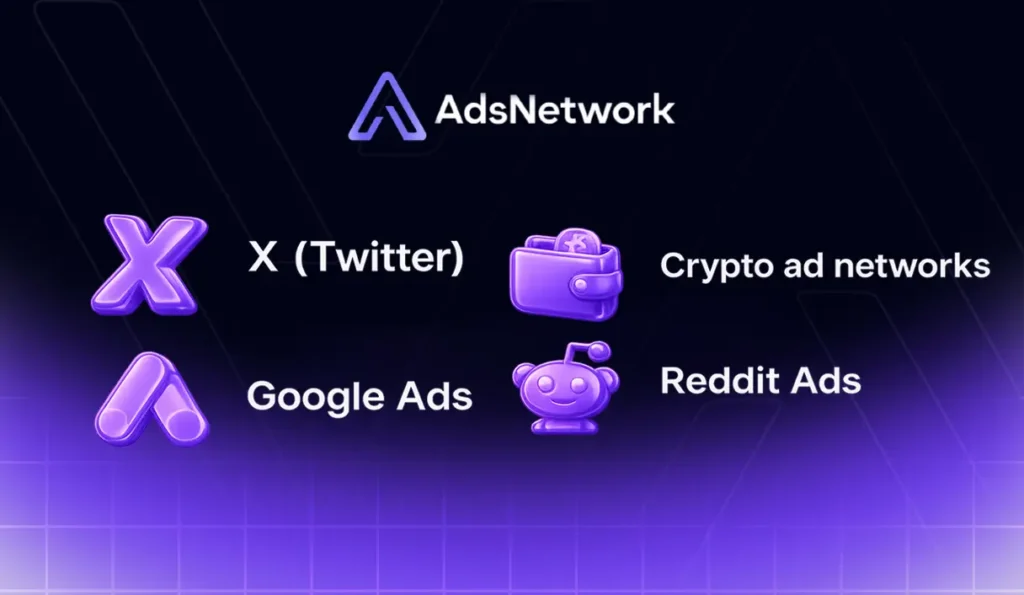
The paid landscape for crypto has evolved since the blanket bans of 2018. Today, several channels deliver real results for projects willing to work within compliance frameworks. The key is precision. “Crypto enthusiasts” is not a targeting strategy.
- X (Twitter): the most crypto-friendly major platform, especially when paired with influencer activity.
- Google Ads: now available to certified advertisers and strong for high-intent search traffic.
- Crypto ad networks: platforms built for Web3 that offer wallet-based and on-chain behavioral targeting mainstream platforms cannot match.
- Reddit Ads: subreddit-level targeting that reaches research-driven crypto audiences.
Crypto ad networks fill the gap that mainstream platforms leave open. For example, AdsNetwork specializes in Web3 advertising with targeting based on actual DeFi, NFT, and trading behavior. To understand the full landscape of platforms and formats, review our complete guide to crypto advertising. Segment by behavior, because DeFi yield farmers, NFT collectors, and day traders each demand different messaging.
Crypto exchanges face their own distinct acquisition challenges. If you are promoting a trading platform specifically, the tactics in our guide to crypto exchange marketing strategies build on the framework here with exchange-specific funnels and retention plays.
Market Making: The Strategy Nobody Talks About
Market making is rarely discussed as a marketing strategy. However, it directly shapes how investors perceive your token. Without dedicated liquidity, newly listed tokens suffer from wide bid-ask spreads, erratic price swings, and thin order books. As a result, these conditions scare away traders regardless of how strong your technology is.
The impact is measurable. In one documented case, after a market maker entered with dedicated liquidity support, a token’s price volatility dropped sharply while trading volume increased substantially. For this reason, many top-tier exchanges require minimum liquidity thresholds before listing. When evaluating a market maker, prioritize a transparent track record, clear reporting on spreads and uptime, and ethical practices. Specifically, avoid any firm promising guaranteed results.
PR, Transparency, and Trust
Press coverage in outlets like CoinDesk, The Block, or Decrypt boosts legitimacy. However, the real advantage comes from positioning your founders as thought leaders through op-eds, conference talks, and podcast appearances. Teams that offer informed commentary on breaking developments naturally attract media attention.
On the trust side, the bar keeps rising. Publish security audits, make smart contract code auditable, and never promise returns. Consequently, projects that operate above board earn disproportionate trust from both retail and institutional audiences.
Measuring What Matters
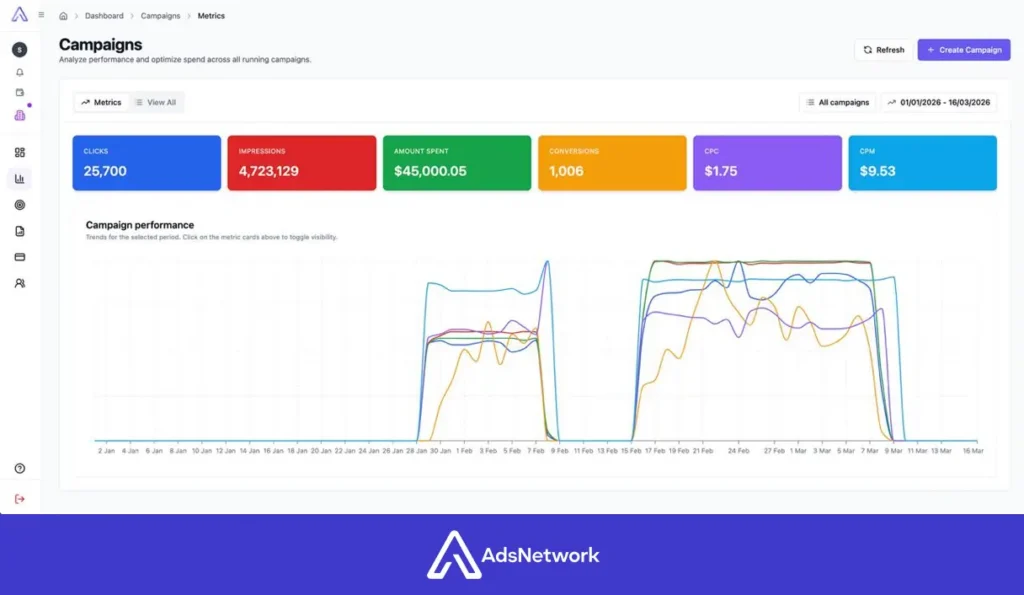
Without measurement, you are guessing. Track these KPIs consistently to know whether your crypto project marketing strategy is working.
- Community engagement rate: active participation matters more than follower counts. A 5,000-member Discord with 40% daily activity beats 50,000 silent followers.
- Customer acquisition cost: what each new user, wallet connection, or investor costs to acquire.
- On-chain metrics: wallet growth, transaction volume, and holder distribution show real adoption.
- Campaign ROAS: track return on ad spend by platform and audience, then reallocate toward what converts.
Build dashboards, review weekly, and iterate fast. For example, if one paid channel shows a lower acquisition cost than the rest, shift budget toward it and test new creatives there. The teams that optimize based on data consistently outperform those running on intuition. In short, measurement is what separates a marketing strategy that scales from one that simply spends.
How to Market a Crypto Project: Final Takeaways
Knowing how to market a crypto project comes down to a repeatable system. Define a sharp value proposition. Build a real community before chasing hype. Publish content that compounds. Partner with aligned voices. Layer in precise paid advertising. Measure everything and reallocate toward what works.
The projects that win in 2026 treat marketing as core infrastructure, not an afterthought. Ready to reach Web3 audiences through on-chain targeting? Explore AdsNetwork’s crypto and blockchain advertising solutions to connect with the right users at the right time.
Featured Posts
Oct 23, 2026
10 min read
What Is CPM in Advertising? Meaning, Formula and 2026 Rates
CPM is the cost an advertiser pays for 1,000 ad impressions, making it one of the most common…
Read Article
Sep 23, 2026
6 min read
What Is Advertising Technology (AdTech) and How Does It Work?
Advertising technology, commonly known as AdTech, refers to the software, platforms, tools, and systems used to plan, buy,…
Read Article
Sep 16, 2026
8 min read
Media Buying: A Complete Guide for Advertisers
Media buying is the process of purchasing advertising space to reach a target audience. It includes choosing where…
Read ArticleNeed Help?
Our team is ready to help you launch successful campaigns.
AI-Powered Mobile
Monitor Your Campaigns Anywhere
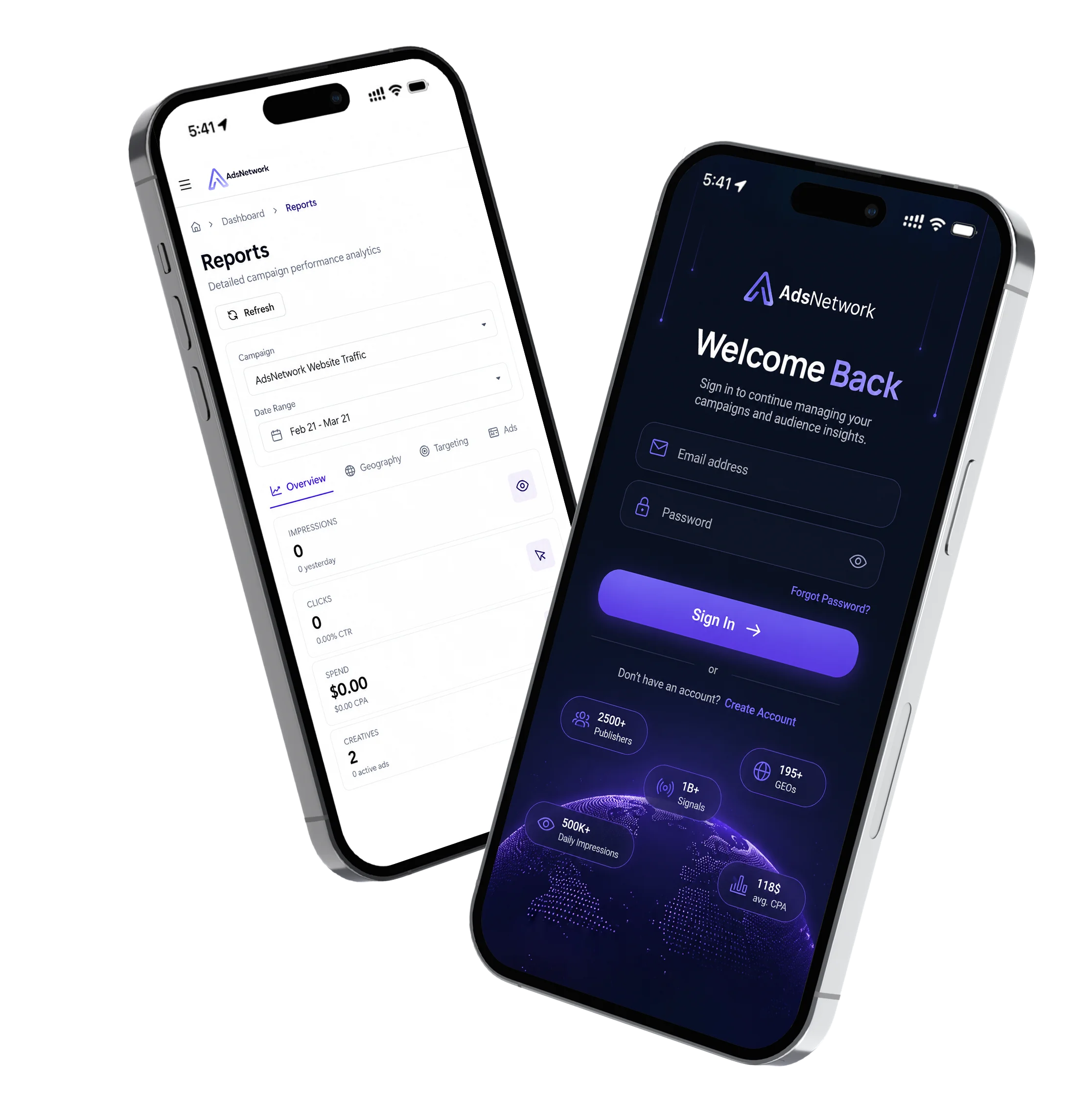
Stay connected to your live AdsNetwork campaigns with our mobile advertising app. Track impressions, clicks, conversions, campaign spend, and overall performance in real time—anytime, anywhere. Available for iOS and Android.