
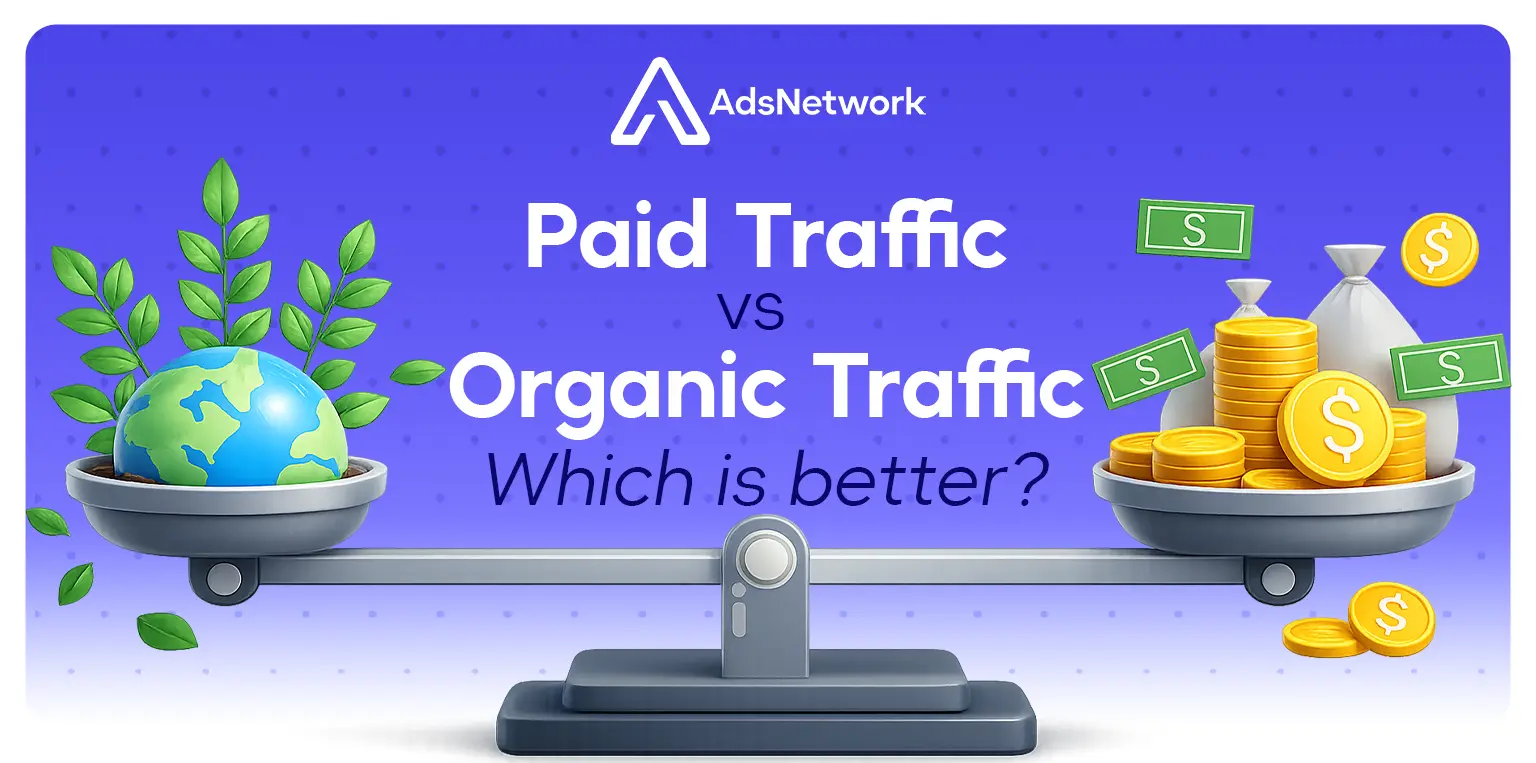
This is one of the most common questions in digital marketing, and it rarely gets a useful answer. The honest response is that paid traffic vs organic traffic is not a competition. They serve different purposes, different timelines, and different costs. Choosing between them without understanding those differences leads to poor results. It is like picking a tool without knowing what you are building.
This guide breaks down what each channel delivers and where each one wins. It also covers how to combine them, and what the paid vs organic choice looks like for crypto and Web3 projects.
The Core Difference Between Paid and Organic Traffic
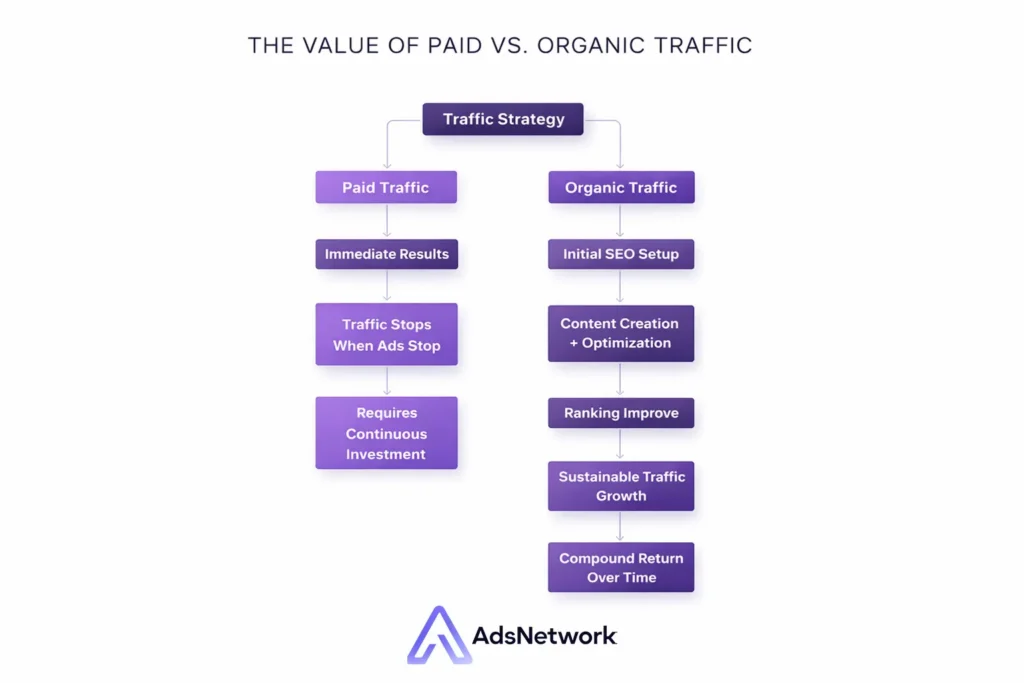
Organic traffic comes from unpaid sources: search engine rankings, social media posts, referral links, and direct navigation. You earn it through content quality, technical SEO, and accumulated authority. It takes time to build but delivers returns that continue long after the initial investment.
Paid traffic, in contrast, is purchased. Search ads, social ads, display campaigns, and sponsored placements all drive paid visitors to your site. The primary advantage is speed. Paid traffic can start flowing within hours of launching a campaign. However, it stops immediately when the budget runs out.
According to data from Digital Silk, organic and paid search traffic combined account for 33 to 35% of all traffic business websites receive. Organic search alone drives 53% of total web traffic, while paid search accounts for around 27%. That volume split reflects the long-term compounding advantage that organic strategies build over time.
Speed vs Longevity: The Fundamental Trade-off
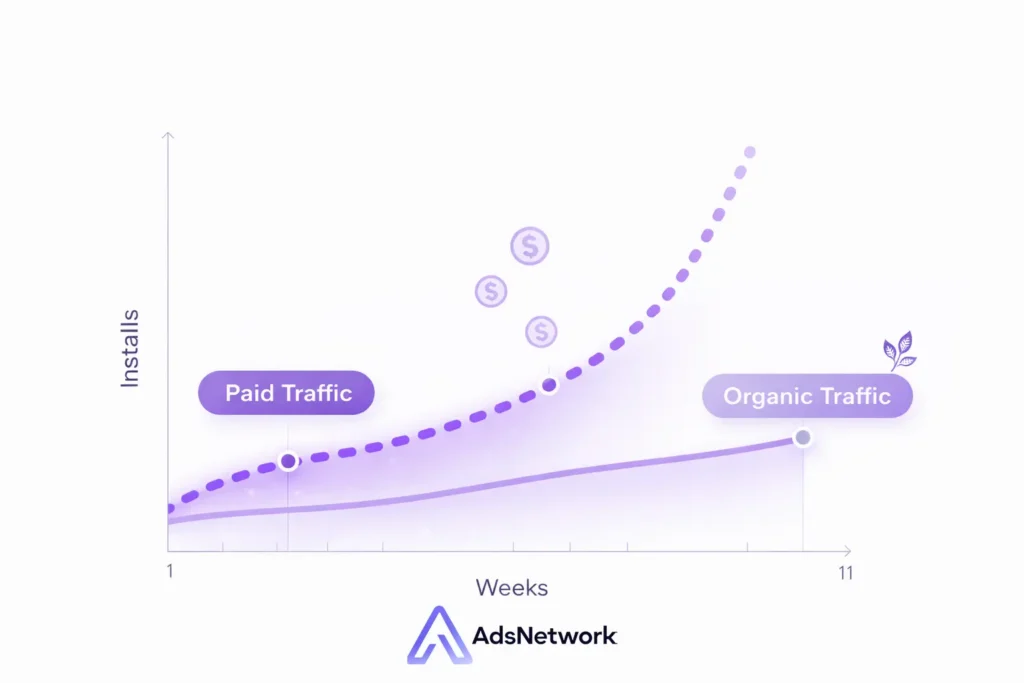
Paid traffic wins on speed without question. A Google Ads or crypto ad network campaign can go live and start delivering visitors the same day. For product launches, seasonal promotions, or time-sensitive campaigns, that speed is irreplaceable. Moreover, paid traffic lets you test offers, messaging, and audiences quickly, providing data that organic channels take months to generate.
Organic traffic, however, wins on longevity. A well-ranked page continues delivering visitors month after month with no additional spend. The cost per click effectively trends toward zero over time as content accumulates authority. SEO can deliver up to 700% ROI when executed as a long-term strategy, according to SeoProfy. That figure reflects the compounding nature of organic visibility, where early investments keep paying dividends for years.
Specifically, the comparison plays out clearly in practice. Invest $8,000 in paid ads and get 100 conversions that month. Invest the same amount in content and SEO, get fewer results in month one. By month six, however, you may have 8,000 monthly organic visitors at effectively zero marginal cost. The channel you choose depends on your time horizon, according to analysis from Rebelgrowth.
Cost and ROI: Where Each Channel Stands
Cost comparison between paid and organic depends heavily on your industry, competitive landscape, and execution quality. Paid traffic has transparent, immediate costs: you pay per click or per impression. Organic traffic carries front-loaded costs in content creation, technical SEO, and link building. Those costs diminish on a per-visitor basis as rankings improve.
From an ROI perspective, 49% of marketers say organic search has the best ROI of any marketing channel, according to Digital Silk. Furthermore, 61% of B2B marketers say SEO generates more leads than any other channel. However, these numbers reflect mature organic programs. In the first twelve months, paid traffic almost always delivers better ROI per dollar. Organic results have simply not yet appeared.
Paid search on Google averages around $2 in revenue for every $1 spent, according to widely cited industry data. In contrast, a well-executed thought leadership SEO campaign can deliver a 748% ROI over its lifetime, according to WordStream statistics. The difference is the time horizon. Paid is better at delivering ROI now. Organic is better at delivering ROI over years.
Conversion Rate: How Each Channel Performs
Conversion rates differ significantly by channel. Organic search converts at an average of 2.7% across industries, according to Ruler Analytics. Paid search averages around 1.5 to 2%. The gap reflects intent. Organic searchers found your page through a specific, self-directed query, indicating stronger purchase intent.
Additionally, social media traffic converts at an average of 1.5%. Paid social ads sit at similar levels depending on targeting quality. However, retargeting campaigns reach users who have already visited your site. Those campaigns deliver conversion rates that rival organic search, because the audience is pre-qualified.
For Web3 and crypto projects, on-chain conversion events are a better quality measure. Specifically, wallet connections and completed swaps matter more than raw click counts. In this context, crypto-native ad networks consistently outperform mainstream paid traffic on these quality metrics.
When Paid Traffic Wins
Paid traffic is the right choice in several specific scenarios. New websites without domain authority benefit from paid traffic to drive initial visitors while organic search builds. Product or token launches benefit from paid traffic to create momentum before organic rankings develop. Additionally, businesses with tight testing timelines use paid traffic to validate offers and landing pages in days, not months.
Paid traffic also wins when targeting precision matters more than cost efficiency. Sometimes you need to reach a very specific audience segment quickly. Paid targeting tools provide that control. Organic search simply cannot replicate it on demand.
Moreover, for crypto and Web3 projects, paid traffic through specialist networks solves a policy problem that organic cannot. Google’s and Meta’s restrictions on crypto content cannot be overridden through SEO. AdsNetwork reaches blockchain audiences without those restrictions. That fills a gap no amount of organic content can close.
When Organic Traffic Wins
Organic traffic wins on total volume and long-term cost efficiency. Organic search accounts for 53% of all website traffic, dwarfing paid’s 27% share. Furthermore, organic traffic keeps delivering after the initial investment, while paid traffic stops the moment the budget does.
Organic also wins on trust. Users generally perceive organic search results as more credible than paid ads. That trust advantage is particularly significant in Web3, where community skepticism about promotional content is high. Organic rankings in response to user queries signal relevance and authority in a way that sponsored placements cannot.
Additionally, organic strategies compound over time in ways paid traffic does not. Each piece of content that ranks adds to your total traffic. Backlinks improve rankings across your entire site. Users who discover you organically become potential direct or return visitors. Paid traffic does not create these second-order effects.
Paid Traffic vs Organic Traffic for Crypto and Web3 Projects
For Web3 teams, the paid vs organic choice is shaped by an additional constraint: mainstream ad platforms restrict most direct crypto promotions. Google and Meta require pre-approval for most blockchain-related advertising, blocking token projects, DeFi protocols, and NFT products outright. That forces the paid traffic channel toward specialist crypto networks.
In contrast, organic traffic faces no such restrictions. Protocol documentation, explainer content, comparison pages, and educational articles about blockchain topics rank on Google freely. Furthermore, B2B companies generate twice the revenue from organic traffic compared to paid channels, according to WordStream data. For Web3 protocols, which often operate on a B2B model, that organic advantage is significant.
The most effective Web3 teams combine both. Organic search builds long-term discovery and trust. Paid campaigns through a specialist Best Advertising Networks for Crypto and Web3 in 2026 provide the fast, targeted reach that organic cannot deliver on demand. Neither channel alone is sufficient. Together, they cover the full range of acquisition needs at every stage of growth. Review our How to Build a Winning Advertising Funnel for guidance on how to structure both channels within a single campaign system.
Paid Traffic vs Organic Traffic: The Answer Is Both
There is no universal winner in the paid traffic vs organic traffic debate. The right answer depends on your current stage, your timeline, your budget, and your audience. Early-stage businesses need paid traffic to generate results while organic builds. Established businesses with strong organic foundations can reduce paid dependency and improve margins.
Similarly, the question is not which channel to use but how to balance them as your business grows. Use paid to accelerate, test, and fill gaps. Use organic to compound, build authority, and reduce cost per acquisition over time. The businesses that win at traffic acquisition are those that treat paid and organic as partners, not competitors.
For crypto and Web3 projects, add the channel constraint to your planning. Organic search builds authority freely. Paid reach, however, requires specialist infrastructure. Visit adsnetwork.io to explore what a crypto-native paid traffic channel looks like as part of your mix.
Featured Posts
Oct 23, 2026
10 min read
What Is CPM in Advertising? Meaning, Formula and 2026 Rates
CPM is the cost an advertiser pays for 1,000 ad impressions, making it one of the most common…
Read Article
Sep 23, 2026
6 min read
What Is Advertising Technology (AdTech) and How Does It Work?
Advertising technology, commonly known as AdTech, refers to the software, platforms, tools, and systems used to plan, buy,…
Read Article
Sep 16, 2026
8 min read
Media Buying: A Complete Guide for Advertisers
Media buying is the process of purchasing advertising space to reach a target audience. It includes choosing where…
Read ArticleNeed Help?
Our team is ready to help you launch successful campaigns.
AI-Powered Mobile
Monitor Your Campaigns Anywhere
Stay connected to your live AdsNetwork campaigns with our mobile advertising app. Track impressions, clicks, conversions, campaign spend, and overall performance in real time—anytime, anywhere. Available for iOS and Android.