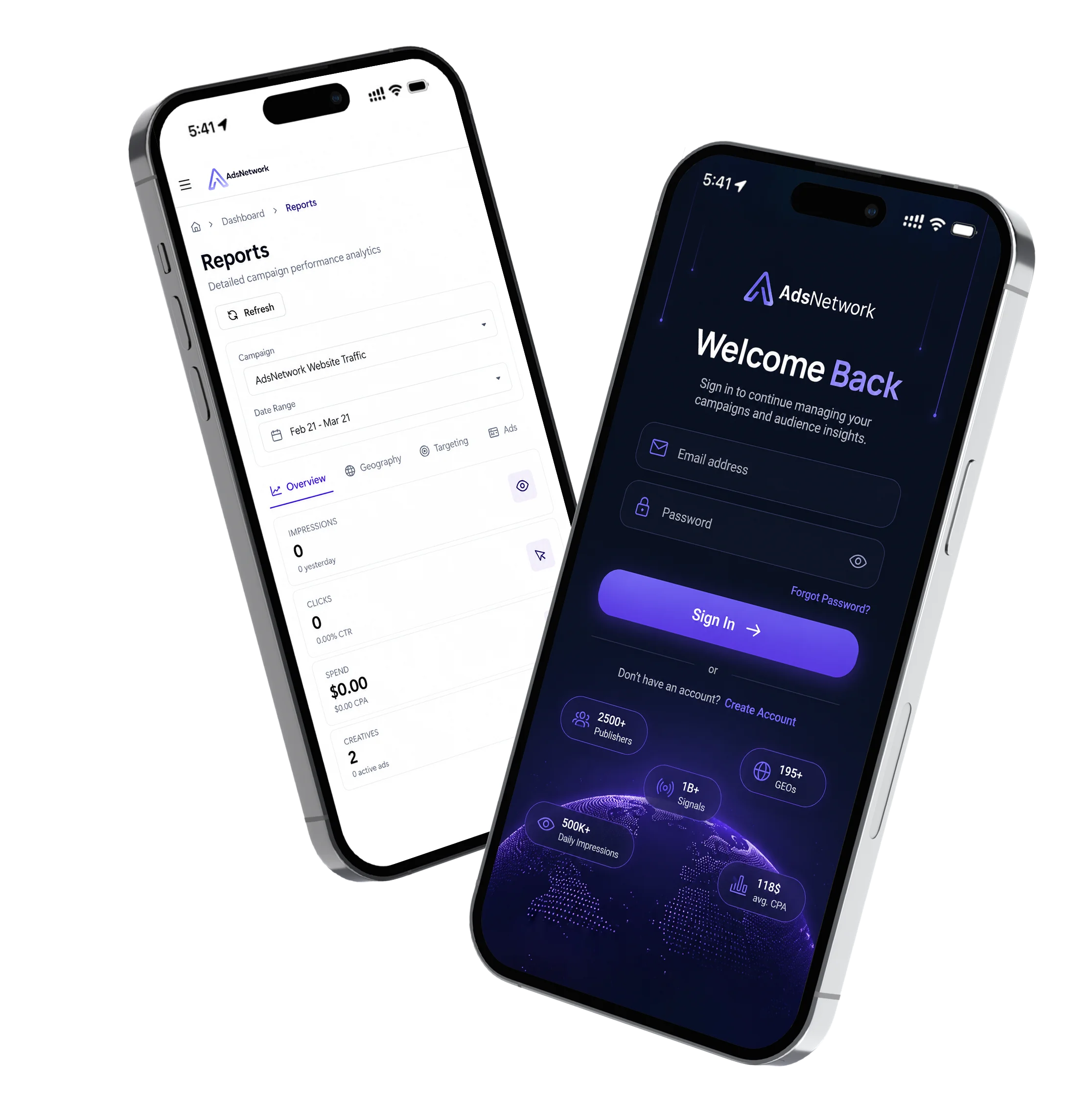


The ad network you choose determines which audiences see your ads, what you pay per impression or click, and whether your campaigns generate real results or just spend budget. It’s critical to choose the right ad network to maximise your return and target the best audience. There are hundreds of ad networks available today, each with different audience pools, pricing models, ad formats, and levels of traffic quality. Choosing the wrong one means wasted spend, low conversions, and no clear path to improving performance.
This guide walks through the criteria that actually matter when selecting an ad network. Whether you are an advertiser buying reach or a publisher selling inventory, these factors determine whether a network relationship delivers value or just inflates your dashboard.
Start With Your Campaign Goal, Not the Network
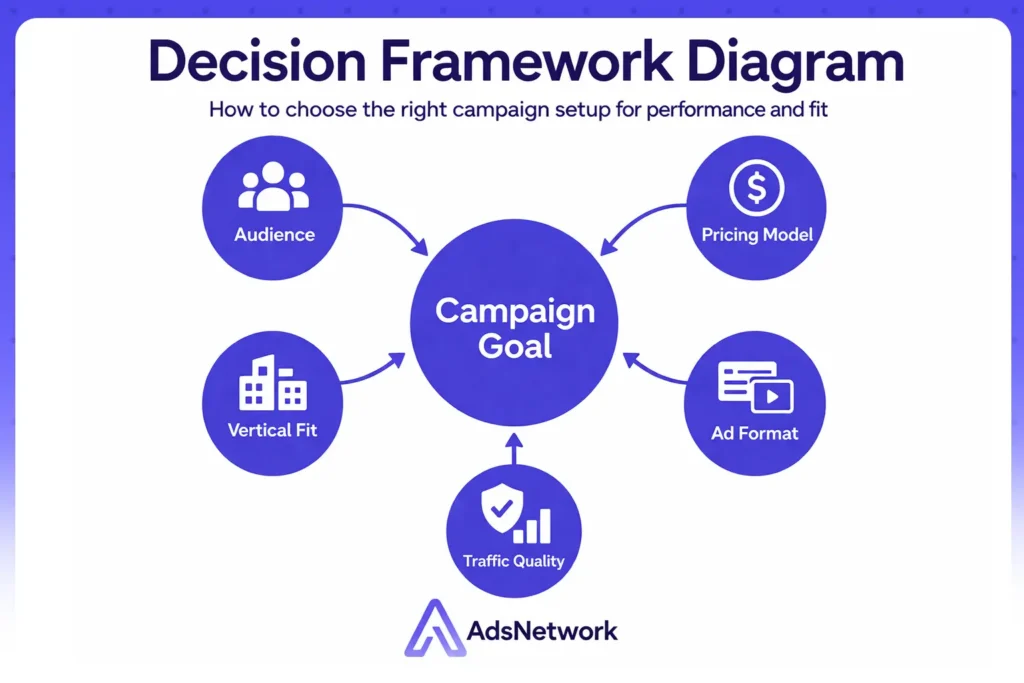
The most common mistake when choosing an ad network is starting with the network itself. Instead, start with a clear campaign goal. Different goals require different types of networks, and matching those correctly from the beginning saves weeks of underperformance.
If your goal is brand awareness, CPM-based display networks that prioritize reach and viewability are the right fit. For direct conversion campaigns, performance networks with CPA or CPC models align your costs with the outcomes you are trying to achieve. Community growth in Web3 calls for a crypto-native network that reaches wallet-active audiences on blockchain-specific publishers, which will outperform any general display buy, even at a higher CPM.
Specifically, define your success metric before evaluating any network. Is it cost per acquisition, ROAS, wallet connections, email sign-ups, or raw reach? That metric should drive every criterion that follows. A network optimized for impressions is the wrong partner for a team optimizing for on-chain conversions, regardless of how impressive its traffic numbers look.
Audience Match: The Most Important Criterion
No factor matters more than audience alignment. An ad network with premium inventory and strong targeting tools delivers zero value if the people seeing your ads have no relevance to your product. Consequently, the first question to ask any ad network is: who are the people in your inventory, and how do you know?
Ask for audience composition data: demographics, interests, geographic distribution, and device mix. For performance advertisers, ask for historical conversion benchmarks from campaigns similar to yours. A well-run ad network should be able to provide this data. If it cannot, that itself is a signal about the transparency of the platform.
For crypto and Web3 advertisers, audience specificity takes on an additional dimension. General display inventory reaches some crypto users, but crypto-native networks deliver audiences who are actively engaged with blockchain products. The difference between a person who once searched for Bitcoin and a verified DeFi wallet holder is enormous. That specificity consistently produces better conversion rates per impression for blockchain products than general audience targeting can achieve.
Pricing Model and Cost Structure
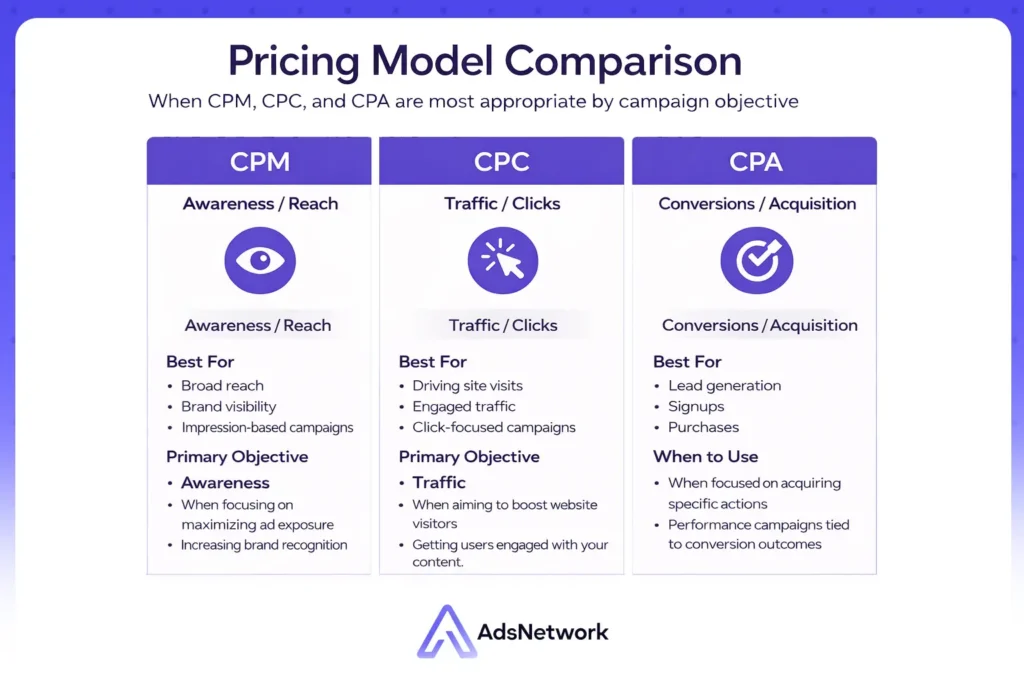
Ad networks use several different pricing models, and the right one depends on your campaign objective. The main options are CPM (cost per thousand impressions), CPC (cost per click), CPA (cost per action), and revenue share for publishers.
CPM works well for awareness campaigns where you want maximum visibility. CPC is more appropriate when your goal is traffic to a specific page. CPA is best when you want to pay only for confirmed conversions. However, understand that the pricing model also signals how the network is incentivized. A CPM network earns from impressions, so it optimizes for reach. A CPA network earns from conversions, so it optimizes for traffic quality.
Beyond the pricing model itself, examine the cost structure carefully. Watch for minimum spend requirements, setup fees, monthly minimums, and contract terms. Some networks require significant commitment before you can evaluate performance. Others offer self-serve access with no minimums, which is preferable when you are testing a new channel for the first time.
Additionally, ask about how the network handles invalid traffic. According to Lunio’s 2026 Global IVT Report, an estimated $63 billion was lost to invalid traffic in 2025 alone. A network that does not actively filter bot traffic is charging you real money for fake impressions. Fraud protection is therefore a direct cost consideration, not just a quality concern.
Ad Formats and Creative Compatibility
Different ad networks support different formats, and not all formats work equally for every type of campaign. Common formats include display banners, native ads, video pre-rolls, push notifications, and interstitials. Verify that the networks you evaluate support the format your creative is designed for.
Format compatibility also affects performance benchmarks. Native ads, which blend with editorial content, typically achieve higher engagement than standard display banners because they feel less intrusive. Video ads command higher CPMs but also require higher production investment. For crypto projects, native content placements on editorial crypto sites often outperform banner placements because the contextual relevance is stronger.
Furthermore, consider how much creative control the network gives you. Some networks require strict format compliance and size specifications. Others offer dynamic creative optimization (DCO) tools that automatically adapt creatives for different placements and audiences. The more creative flexibility the network provides, the easier it is to test and iterate toward higher-performing ads.
Traffic Quality and Fraud Protection
Reach and pricing mean nothing if the traffic is fake. Traffic quality is the criterion that most advertisers underweight when evaluating ad networks, and it is the one that most often explains the gap between dashboard metrics and real business results.
When evaluating a network, ask specifically about its invalid traffic (IVT) rate. Industry analysis by Fraudlogix found an overall IVT rate of 20.64% across 105.7 billion impressions in 2025. That means roughly one in five impressions across the digital advertising ecosystem shows characteristics of non-human activity. A network that cannot demonstrate how it filters against this rate is likely passing some of that waste to your budget.
Look for networks with independent traffic verification partnerships, real-time fraud filtering, and transparent reporting on invalid traffic rates. Additionally, ask what happens to your budget when fraud is detected. Reputable networks credit back confirmed invalid traffic. Networks that do not are, in effect, profiting from fraud at your expense.
Transparency and Reporting
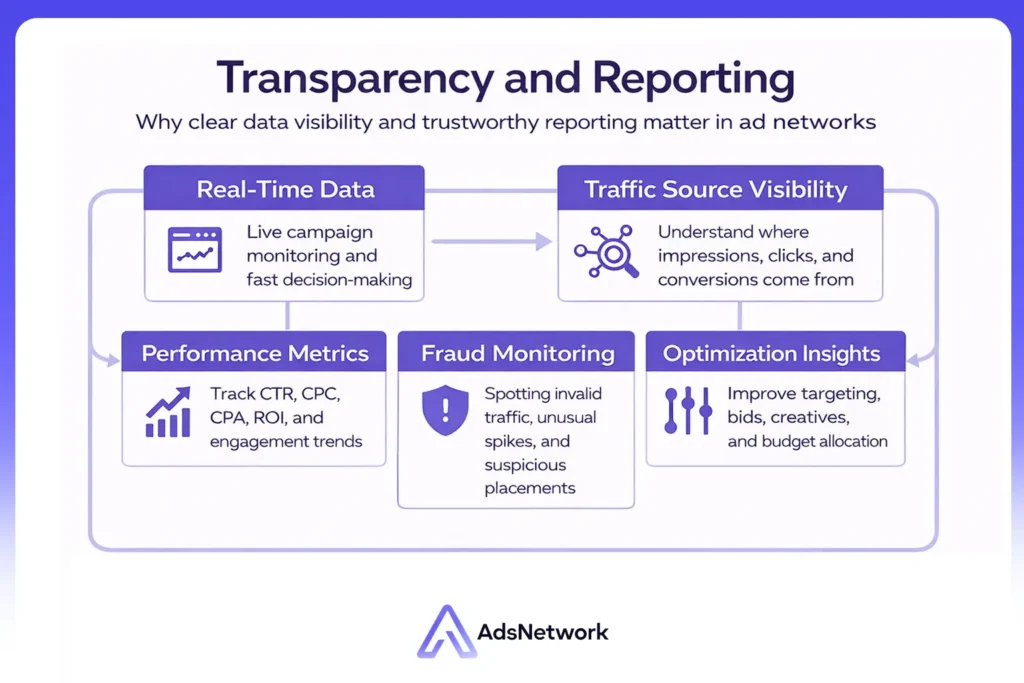
Transparency is a signal of network quality. The best ad networks give advertisers clear visibility into where their ads are running, which placements are performing, what the effective CPM is, and how the budget is being allocated. Networks that obscure this data are often doing so because the underlying numbers would cause advertisers to pull spend.
Specifically, look for: real-time reporting dashboards with campaign-level breakdowns, placement-level performance data, audience segment reporting, and clear attribution models. For publishers, look for revenue dashboards that show gross revenue, the network’s margin, and your net payout, with enough granularity to identify which ad units and placements are generating the most value.
In the Web3 advertising context, transparency takes on additional importance. Crypto advertisers paying premium CPMs for blockchain-native audiences need to verify that those audiences are genuine. Networks that connect campaign delivery to on-chain signals, such as wallet activity data or DeFi protocol engagement, provide a level of verification that general ad networks simply cannot offer.
Vertical Specialization: Why Niche Networks Often Outperform General Ones
General ad networks offer scale. Niche and vertical-specific ad networks offer relevance. For most performance campaigns, relevance wins. A crypto ad network reaches a smaller total audience than Google Display, but every user in that audience is already engaged with blockchain products. That context produces fundamentally different conversion rates.
The same principle applies across verticals. A finance-specific ad network outperforms general display for insurance or investment products. A gaming ad network outperforms general display for in-app purchases. The underlying dynamic is audience self-selection: people reading a crypto publication are, by definition, interested in crypto. That pre-qualification shortens the path from impression to conversion.
AdsNetwork is built around this principle for the Web3 ecosystem. By aggregating inventory specifically from blockchain-focused publishers, AdsNetwork gives crypto advertisers access to an audience that has already demonstrated interest in on-chain products.
How to Choose the Right Ad Network: A Practical Framework
To summarize, use this framework when evaluating any ad network relationship. First, define your campaign goal and success metric before approaching any network. Second, verify audience composition data and match it to your target customer profile. Third, evaluate the pricing model in the context of your goal: CPM for awareness, CPC or CPA for performance. Fourth, ask direct questions about fraud protection and IVT rates. Fifth, evaluate reporting transparency before committing budget. Sixth, consider whether a specialist network in your vertical outperforms a general network for your specific use case.
For crypto and Web3 teams, also verify that the network operates outside the policy restrictions of mainstream platforms. Most blockchain advertising is restricted on Google and Meta. A specialist crypto ad network solves this problem by reaching blockchain audiences through channels specifically designed for this space.
If you are ready to evaluate what a crypto-native ad network looks like for your next campaign, visit AdsNetwork.
Featured Posts
Oct 23, 2026
10 min read
What Is CPM in Advertising? Meaning, Formula and 2026 Rates
CPM is the cost an advertiser pays for 1,000 ad impressions, making it one of the most common…
Read Article
Sep 23, 2026
6 min read
What Is Advertising Technology (AdTech) and How Does It Work?
Advertising technology, commonly known as AdTech, refers to the software, platforms, tools, and systems used to plan, buy,…
Read Article
Sep 16, 2026
8 min read
Media Buying: A Complete Guide for Advertisers
Media buying is the process of purchasing advertising space to reach a target audience. It includes choosing where…
Read ArticleNeed Help?
Our team is ready to help you launch successful campaigns.
AI-Powered Mobile
Monitor Your Campaigns Anywhere
Stay connected to your live AdsNetwork campaigns with our mobile advertising app. Track impressions, clicks, conversions, campaign spend, and overall performance in real time—anytime, anywhere. Available for iOS and Android.