
Choosing between native ads and display ads is one of the most important decisions for any digital advertiser. This guide compares both formats to help you find the best fit for your campaigns.
In the ever-evolving world of digital advertising, advertisers are constantly seeking the most effective ways to reach their target audience and achieve their marketing goals. Two of the most prominent ad formats are native ads and display ads, each with its own unique characteristics and potential benefits. In this comprehensive blog post, we’ll explore the differences between these two ad formats and help you determine which one might be the better choice for your advertising campaigns.
What are Native Ads?
Native ads are a form of paid advertising that blend seamlessly into the natural content of a website or app. They are designed to match the look, feel, and function of the surrounding editorial content, making them less intrusive and more engaging for the user. Native ads typically appear as sponsored content, recommended articles, or product recommendations, and they are often placed in areas where users are already consuming content.
Native Ads in a Real Campaign
Native ads prove their value when audiences are deeply engaged and unwilling to tolerate interruption. During high-attention events, fans are reading match previews, scrolling live updates, and watching highlights, so ads that blend into the content stream outperform banners that fight for notice. Native formats earn clicks by feeling like part of the experience.
Native ads during the World Cup illustrate this well. A sponsored article on team form or a recommended widget beside live scores sits naturally where fans already focus. Display has its place for reach and retargeting, but native wins when relevance and context carry the message.
What are Display Ads?
Display ads, on the other hand, are the more traditional form of online advertising. They are typically rectangular in shape and appear as banners, sidebar ads, or other standalone placements on a web page. Display ads are often used to promote products, services, or brand awareness, and they can be highly targeted based on the user’s browsing history, demographics, and other data points.
Comparing Native Ads and Display Ads
Engagement Rates
One of the key differences between native and display ads is their engagement rates. Studies have shown that native ads tend to have higher click-through rates (CTRs) and longer dwell times compared to traditional display ads. This is because native ads are often more relevant and less disruptive to the user’s experience, leading to a higher likelihood of engagement.
Viewability
Viewability is an important metric in digital advertising, as it measures the percentage of ads that are actually seen by the user. Native ads generally have higher viewability rates than display ads, as they are more integrated into the content and less likely to be hidden or scrolled past.
Brand Awareness
Native ads can also be more effective at building brand awareness than display ads. Because they are more seamlessly integrated into the content, users are more likely to remember the brand or product being advertised, which can lead to increased brand recognition and loyalty.
Choosing the Right Ad Format for Your Campaigns
When deciding between native and display ads for your advertising campaigns, it’s important to consider your specific goals, target audience, and the overall context of your marketing strategy. Native ads may be the better choice if you’re focused on improving engagement, increasing brand awareness, or delivering a more positive user experience. Display ads, on the other hand, may be more suitable if you’re primarily interested in driving direct response or targeting specific audience segments.
Ultimately, the best approach is to test different ad formats and strategies to see what works best for your business. By analyzing the performance data and adjusting your campaigns accordingly, you can maximize the effectiveness of your digital advertising efforts and achieve the desired results.
Conclusion
Whether you choose native ads or display ads, it’s clear that both ad formats have their own unique strengths and can be valuable tools in your digital advertising arsenal. By understanding the key differences between these two formats and aligning them with your marketing objectives, you can create more effective and engaging campaigns that resonate with your target audience and drive meaningful business outcomes.
If you’re ready to take your advertising campaigns to the next level, contact our team of experts to learn more about our digital advertising services and how we can help you achieve your marketing goals.
Featured Posts

Oct 23, 2026
10 min read
What Is CPM in Advertising? Meaning, Formula and 2026 Rates
CPM is the cost an advertiser pays for 1,000 ad impressions, making it one of the most common…
Read Article
Sep 23, 2026
6 min read
What Is Advertising Technology (AdTech) and How Does It Work?
Advertising technology, commonly known as AdTech, refers to the software, platforms, tools, and systems used to plan, buy,…
Read Article
Sep 16, 2026
8 min read
Media Buying: A Complete Guide for Advertisers
Media buying is the process of purchasing advertising space to reach a target audience. It includes choosing where…
Read ArticleNeed Help?
Our team is ready to help you launch successful campaigns.
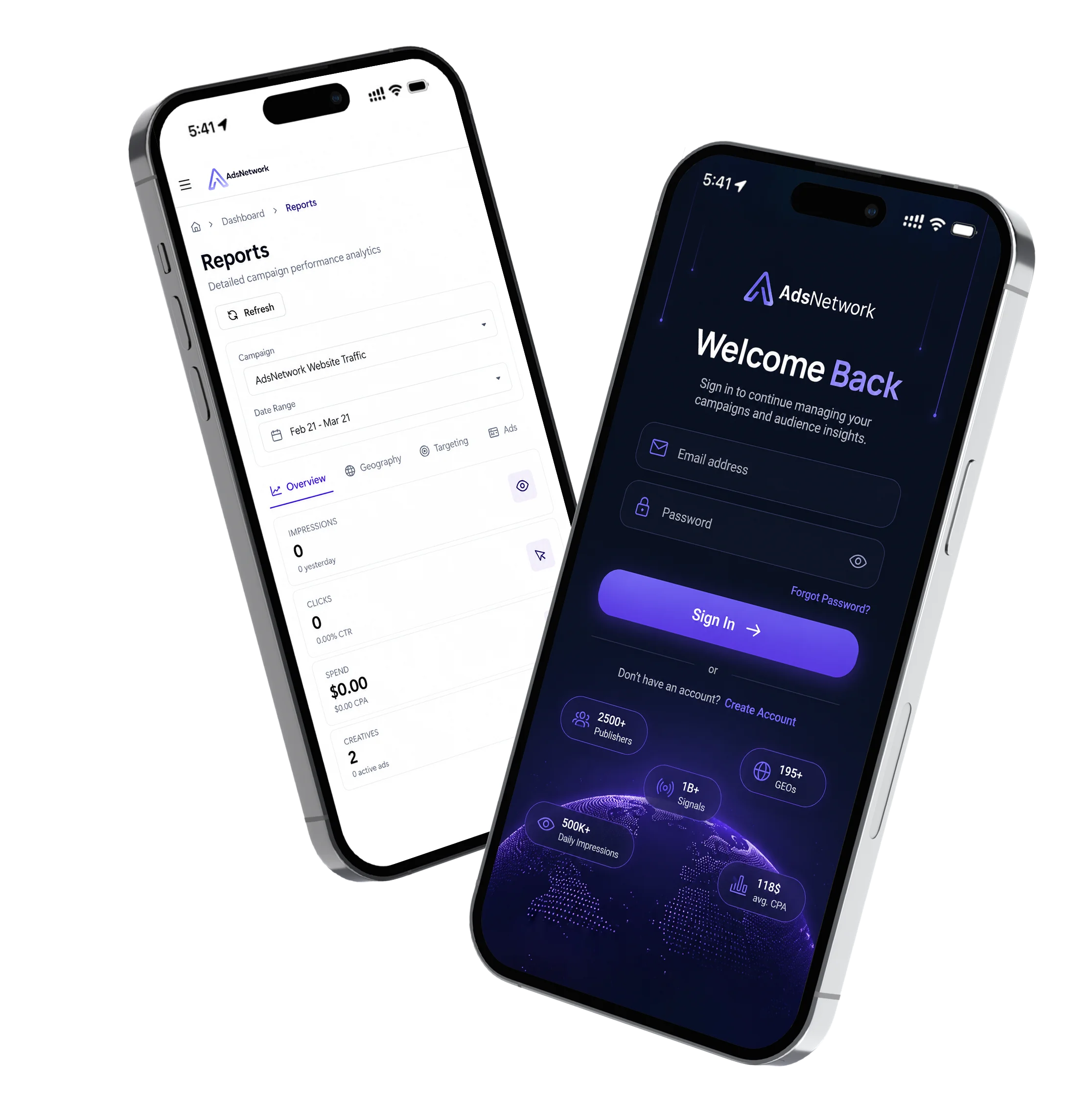
AI-Powered Mobile
Monitor Your Campaigns Anywhere
Stay connected to your live AdsNetwork campaigns with our mobile advertising app. Track impressions, clicks, conversions, campaign spend, and overall performance in real time—anytime, anywhere. Available for iOS and Android.