

Programmatic Display Advertising: The Future of Scalable Digital Advertising
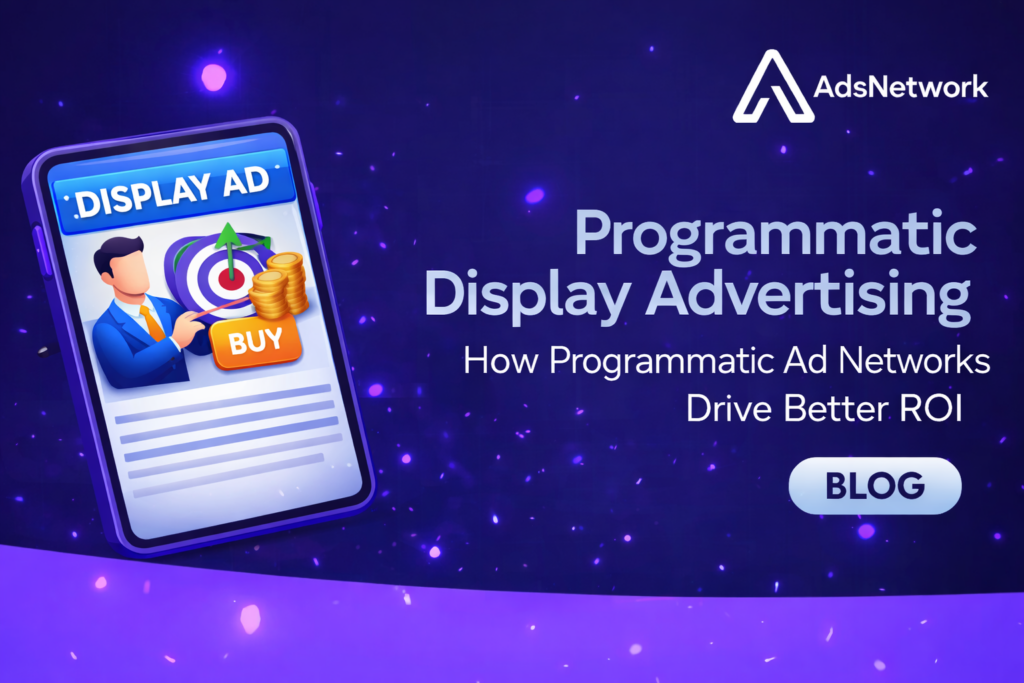
Digital advertising has evolved dramatically over the past decade, and programmatic display advertising has become one of the most powerful ways for advertisers and publishers to scale their campaigns efficiently. With automation, real-time bidding, and data-driven targeting, programmatic ad networks enable brands to deliver the right message to the right audience at the right time.
In this guide, we’ll explore how programmatic display advertising works, its benefits, and why advertisers and publishers are increasingly relying on programmatic ad networks to maximize revenue and campaign performance.
Key Takeaways
- Programmatic display advertising automates the buying and selling of display ad inventory.
- It uses real-time bidding and data-driven targeting to deliver ads efficiently.
- Advertisers gain better audience targeting, scalability, and ROI compared to traditional display advertising.
- Programmatic ad networks connect advertisers with large inventories of publishers worldwide.
- Real-time analytics allow continuous optimization and improved campaign performance.
What Is Programmatic Display Advertising?
Programmatic display advertising refers to the automated process of buying and selling display ad inventory—such as banner ads—through advertising technology platforms. Instead of manually negotiating placements, programmatic systems use algorithms and data to purchase ad impressions in real time.
In simple terms:
- Display ads are the visual banners or rich media ads shown on websites.
- Programmatic technology automates the process of purchasing those ads.
When a user visits a website, an automated auction occurs in milliseconds. Advertisers bid for the ad impression, and the highest bidder wins the placement. This process is known as real-time bidding (RTB).
How Programmatic Display Advertising Works
The programmatic ecosystem includes several components that work together to deliver ads instantly:
1. Advertisers Set Campaign Parameters
Advertisers define their target audience, budget, and bid strategy through a demand-side platform (DSP).
2. Publishers Offer Ad Inventory
Website owners make their ad spaces available through supply-side platforms (SSPs).
3. Real-Time Bidding (RTB) Auction
When a user loads a webpage, an auction happens instantly among advertisers.
4. The Winning Ad Is Displayed
The highest qualified bid wins and the ad is displayed to the user.
5. Campaign Performance Is Optimized
Advertisers analyze performance metrics such as impressions, clicks, and conversions to optimize campaigns.
This entire process takes milliseconds, allowing advertisers to scale campaigns across millions of websites and apps.
Key Benefits of Programmatic Display Advertising
1. Automated Ad Buying
Programmatic advertising replaces manual ad buying with automation, saving time and improving efficiency.
2. Advanced Audience Targeting
Advertisers can target users based on demographics, behavior, interests, and location, ensuring ads reach the most relevant audience.
3. Real-Time Optimization
Campaigns can be adjusted instantly based on performance data, improving ROI and reducing wasted ad spend.
4. Massive Inventory Access
Programmatic ad networks provide access to a large pool of websites and digital properties, expanding reach for advertisers.
5. Data-Driven Insights
Advertisers gain detailed analytics on ad performance, enabling smarter campaign decisions.
Why Advertisers Choose Programmatic Ad Networks
Programmatic ad networks provide a centralized platform where advertisers can run campaigns across multiple publishers without negotiating individual deals.
Advantages include:
- Access to premium publisher inventory
- Cross-device targeting (desktop, mobile, and connected TV)
- Scalable global reach
- Automated campaign management
- Transparent reporting and analytics
For brands looking to scale quickly, programmatic advertising offers a more efficient alternative to traditional display networks.
Programmatic Display Ads vs Traditional Display Advertising
| Feature | Programmatic Display Ads | Traditional Display Ads |
|---|---|---|
| Buying Process | Automated | Manual negotiation |
| Targeting | Data-driven | Limited targeting |
| Optimization | Real-time | Manual adjustments |
| Scale | Global inventory | Limited networks |
| Efficiency | High | Moderate |
Programmatic advertising allows brands to reach broader audiences with higher precision compared to traditional display advertising models.
Best Practices for Running Successful Programmatic Display Campaigns
To maximize performance, advertisers should follow these strategies:
Use First-Party Data
Leverage customer data to refine audience targeting.
Focus on High-Quality Creatives
Well-designed banners increase engagement and click-through rates.
Test Multiple Ad Variations
A/B testing different creatives and targeting options helps identify the best performing ads.
Monitor Campaign Metrics
Track impressions, CTR, conversions, and cost-per-acquisition to optimize campaigns.
Partner With a Reliable Programmatic Ad Network
Choosing a trusted network ensures brand safety, fraud protection, and quality inventory.
FAQ: Programmatic Display Advertising
What is programmatic display advertising?
Programmatic display advertising is an automated method of buying and selling display ads through technology platforms using real-time auctions and data targeting.
How do programmatic ad networks work?
Programmatic ad networks connect advertisers and publishers through automated systems that bid on ad impressions and deliver ads instantly to users.
What are display ads in programmatic advertising?
Display ads are visual advertisements such as banners, rich media ads, or interactive creatives shown on websites or mobile apps.
Is programmatic advertising better than traditional display advertising?
Yes, programmatic advertising offers better targeting, automation, and real-time optimization compared to traditional display advertising methods.
Who uses programmatic display advertising?
Both advertisers and publishers use programmatic advertising. Advertisers use it to promote products, while publishers monetize their website traffic through ad inventory sales.
Ready to Get Started?
Launch your advertising campaign today and reach your target audience effectively.
Start Your CampaignAbout the Author
AdsNetwork
Content specialist focused on digital advertising and marketing strategies. Passionate about helping businesses grow through data-driven campaigns.
Related Articles
Retargeting Ads Strategy That Converts
Somewhere between 96 and 98% of the people who visit your website leave without taking any action. They read a page, check a price, look at a product, and disappear. Standard digital advertising treats those people as lost. A strong retargeting ads strategy treats them as your warmest leads, because that is exactly what they […]
13 min read

How to Optimize Ad Campaigns for Maximum ROI
Most ad budgets do not disappear in one bad decision. They erode slowly, spread across campaigns that were never truly dialed in: audiences that are too broad, creative that went stale months ago, landing pages that convert at half the rate they should, and attribution models that hide where the real money is going. To […]
12 min read
How to Increase ROAS in Digital Advertising
Most campaigns do not fail because the product is wrong or the budget is too small. They fail because the return on ad spend never gets high enough to justify scaling. If you’re looking for ways to increase ROAS, it’s important to realise that low ROAS is not a budget problem. It is a signal […]
11 min read