

The iGaming Advertising Playbook for 2025: Push Ads, Compliance, and Performance Marketing
The iGaming advertising industry is spending over $12 billion in 2025. Learn the complete playbook for push notification ads, regulatory compliance, CPA optimization, and AI-driven performance marketing strategies.
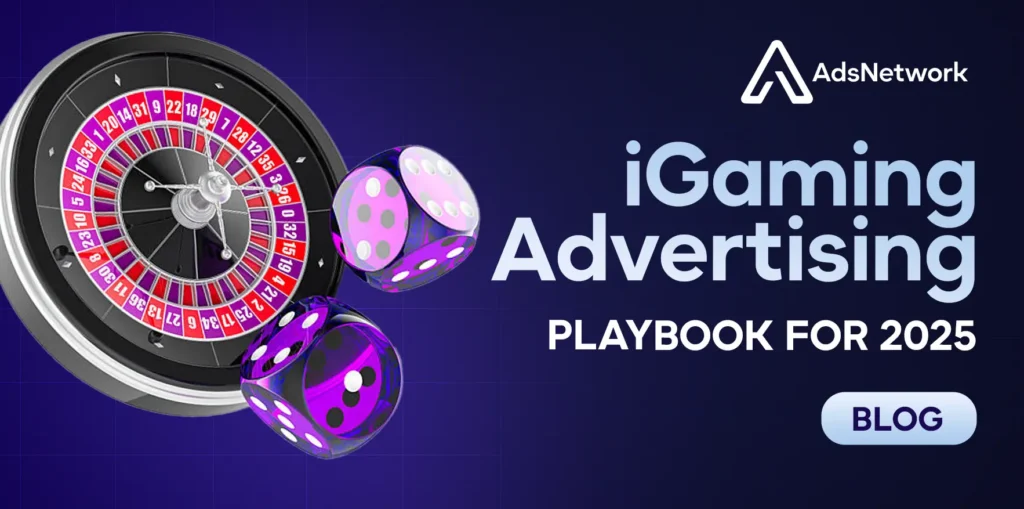
iGaming advertising is entering a new era of scale, regulation, and performance-driven strategy. With the online gambling market projected to reach $101 billion by 2026 and global iGaming ad spend surpassing $12 billion in 2025, the opportunity for advertisers has never been larger — but neither have the challenges. This playbook breaks down the channels, compliance rules, and optimization strategies every iGaming advertiser needs to succeed.
The iGaming Market in 2025: Massive Scale, Fierce Competition
The numbers tell the story. The global online gambling market is valued at $91.63 billion in 2025, growing at a 10.72% CAGR toward $168.71 billion by 2031. Nearly 600 million people participate in some form of online gambling, and over 75% of iGaming companies now spend more than half of their marketing budgets on digital advertising.
Mobile platforms have captured 53.65% of the market, with sports betting dominating at 52.05% market share. Europe leads with 56.9% of global revenues, but emerging markets in Latin America, Africa, and Asia-Pacific are growing fastest. For advertisers, this means the audience is vast, mobile-first, and increasingly global.
Why Push Notification Ads Are Dominating iGaming Campaigns
Push notification advertising has emerged as one of the highest-performing channels for iGaming campaigns. Unlike display or social ads that compete for attention in crowded feeds, push notifications land directly on user devices with an opt-in model that ensures genuine engagement.
The Performance Data Speaks for Itself
Push notifications deliver impressive metrics across the board. The average open rate sits at 20% across industries, with rich push notifications (containing images or media) achieving a 56% higher open rate. The average click-through rate reaches 28%, and conversion rates average 4.4% — numbers that most display campaigns can only dream of.
For iGaming specifically, push ads are even more compelling. Campaigns that leverage geotargeting nearly double their open rates (from 4.2% to 7.9%) and more than double conversion rates (from 1.5% to 3.8%). Personalized messages increase reaction rates by 4x, while emoji usage adds another 20% boost. Messages of 10 words or fewer achieve nearly double the click rate compared to longer notifications.
Retention: The Hidden Power of Push
Beyond acquisition, push notifications are a retention powerhouse. Users receiving notifications in their first 90 days show nearly 3x higher retention. Weekly notifications result in 440% higher retention rates, and daily notifications yield 820% higher retention versus zero notifications. For iGaming operators where player lifetime value determines profitability, this retention impact is transformative.
Android users are particularly receptive, with a 91.1% opt-in rate compared to iOS at 43.9%. The gaming industry overall sees a 63.5% opt-in rate, making it one of the most push-friendly verticals.
Push Ad Cost Efficiency
Push traffic is also remarkably cost-efficient. CPC rates on major networks start as low as $0.001 per click, making it accessible for both large operators and smaller affiliates. Networks like EVADAV deliver over 10 billion push impressions monthly, providing massive scale at competitive prices. This combination of performance and affordability makes push the go-to channel for iGaming advertisers operating on CPA models.
Navigating the Compliance Minefield
The regulatory landscape for iGaming advertising has never been more complex. In 2024 alone, operators paid £67 million in penalties globally. Understanding and complying with regulations across different jurisdictions is no longer optional — it is the foundation of any sustainable iGaming advertising strategy.
Key Regulatory Changes by Region
United Kingdom: The UK Gambling Commission has intensified its focus on how bonuses are promoted, the language used in reviews, and the clarity of calls-to-action. Aspire Global received a £1.4 million fine for anti-money laundering and social responsibility breaches — a clear signal that enforcement is getting stricter.
European Union: Belgium and Italy have imposed broad bans on gambling promotion, covering both affiliates and influencer-led campaigns. The Netherlands allows affiliation but requires proof that traffic is directed to audiences above legal gambling age. Germany and Sweden continue issuing fines for non-compliant advertising.
Brazil: The National Consumer Secretariat banned betting bonuses and restricted gambling ads targeting minors, with daily fines of approximately €8,000 for violations.
United States: State-by-state variation creates significant operational challenges for national campaigns, with inconsistent rules around promotion language and wager requirements.
The Affiliate Liability Shift
Perhaps the most significant trend is the shift in liability. Regulators are increasingly holding affiliates directly responsible for what they publish — not just the operators. This means every advertiser in the chain must ensure their creatives include mandatory disclosures, responsible gambling messaging, and proper age-gating. Compliance monitoring tools like GiG Comply (scanning 25,000+ pages daily) and Rightlander (examining millions of monthly pages) have become essential infrastructure.
The Performance Marketing Evolution: From CPA to LTV
The iGaming affiliate model is undergoing a fundamental transformation. Traditional volume-based CPA (Cost Per Acquisition) models are giving way to hybrid CPA/revenue share structures that emphasize player quality over quantity. Last-click attribution is crumbling — operators relying on flat CPA risk overpaying for volatile traffic while under-rewarding campaigns that generate genuine long-term player value.
Building a Modern iGaming Campaign Stack
1. Diversify Your Channels: Combine push notifications with native ads, social campaigns, and content marketing. Each channel serves a different point in the acquisition funnel. Push excels at re-engagement and time-sensitive promotions, while native and content builds long-term brand trust.
2. Leverage AI-Driven Bidding: AI has moved from buzzword to backbone in iGaming advertising. Agentic AI systems can independently adjust bids, reallocate budgets, and swap creative assets based on real-time performance. This frees media buyers to focus on strategy rather than micro-management.
3. Gate Attribution on Quality Metrics: Tier your commissions based on 30-day and 60-day player value, not just first-deposit volume. Implement KYC-gated attribution and publish partner scorecards to build transparency and attract quality affiliates.
4. Invest in Micro-Influencers: Mid-tier creators are outperforming mega-influencers on lifetime value because they feel local and authentic. In iGaming, where trust matters enormously, a streamer with 50,000 engaged followers often delivers better ROI than a celebrity endorsement.
5. Prioritize Mobile Creatives: With 53.65% of iGaming traffic coming from mobile, every creative asset — from push notification copy to landing pages — must be designed mobile-first. Rich push formats with carousels and one-tap actions are becoming the standard.
Social Media: Platform-Specific Strategies
Social media advertising for iGaming requires navigating strict platform policies. Meta (Facebook and Instagram) only allows gambling ads in approved regions with verified licenses. X (formerly Twitter), Reddit, and Telegram offer more flexibility for betting promotions. For B2B iGaming providers, LinkedIn holds an undisputed lead for thought leadership and partnership development.
The key is matching your audience to the right platform: sports bettors respond to real-time Twitter/X updates during live events, casino players engage through rich visual content on Instagram, and poker communities thrive in Telegram groups with exclusive tournament announcements.
What Comes Next: 2026 and Beyond
The iGaming advertising landscape is evolving toward attention-based metrics. New models like “Cost Per Second” and “QualityCPM” recognize that a 5-second active interaction outweighs passive impressions. Generative AI is enabling dynamic ad personalization at unprecedented scale, while privacy regulations are making first-party data more valuable than ever — publishers with consent-based audience data see CPMs 30-50% higher than open auction competitors.
For advertisers ready to embrace these shifts, the iGaming vertical offers exceptional growth potential. The playbook is clear: lead with push notifications for performance, build compliance into your DNA, measure on lifetime value not just conversions, and let AI handle the optimization while you focus on strategy.
Ready to launch high-performing iGaming campaigns? Contact AdsNetwork to explore push notification advertising, programmatic buying, and AI-optimized campaign management for the iGaming industry.
Ready to Get Started?
Launch your advertising campaign today and reach your target audience effectively.
Start Your CampaignAbout the Author
Ana Collins
Content specialist focused on digital advertising and marketing strategies. Passionate about helping businesses grow through data-driven campaigns.
Related Articles
How to Build a Winning Advertising Funnel
Here is the problem with most paid advertising campaigns: they treat every user the same. A cold audience sees the same ad as someone who spent ten minutes on your pricing page. The campaign looks active. The dashboard shows impressions and clicks. But conversions stay flat, and nobody can explain why. The answer is almost […]
11 min read
Retargeting Ads Strategy That Converts
Somewhere between 96 and 98% of the people who visit your website leave without taking any action. They read a page, check a price, look at a product, and disappear. Standard digital advertising treats those people as lost. A strong retargeting ads strategy treats them as your warmest leads, because that is exactly what they […]
13 min read
How to Optimize Ad Campaigns for Maximum ROI
Most ad budgets do not disappear in one bad decision. They erode slowly, spread across campaigns that were never truly dialed in: audiences that are too broad, creative that went stale months ago, landing pages that convert at half the rate they should, and attribution models that hide where the real money is going. To […]
12 min read