
Web3 game marketing in 2026 requires a fundamentally different approach than traditional gaming promotion. The Web3 gaming market is valued at $33.4 billion and heading toward $183 billion by 2034. The opportunity is enormous, but so is the noise. This guide covers the user acquisition strategies, advertising channels, and metaverse marketing tactics that are working for GameFi projects and Web3 game studios right now.
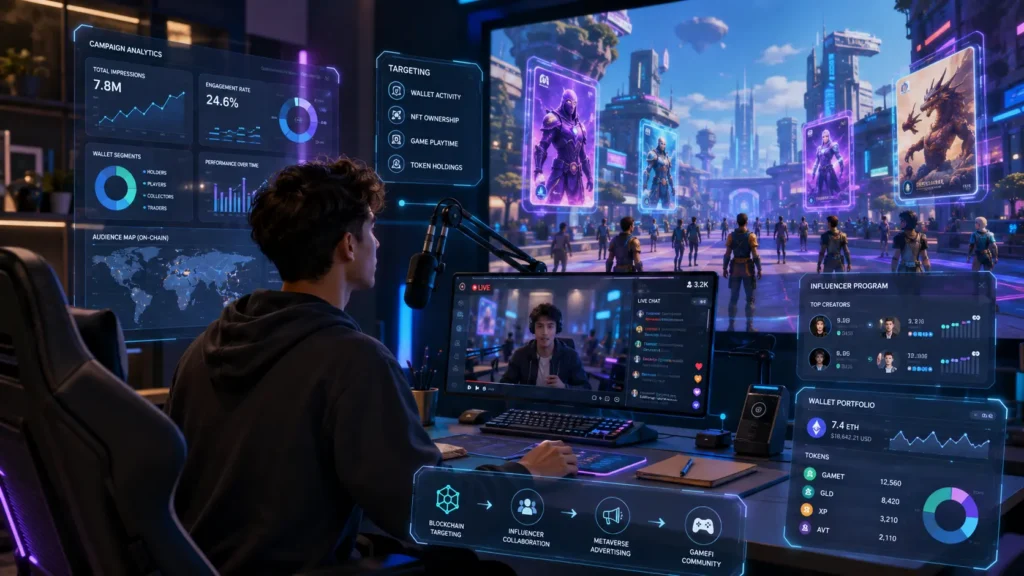
Web3 game marketing in 2026 combines blockchain-native targeting, influencer programs, and metaverse advertising to reach GameFi audiences.
The Web3 Gaming Market: Beyond the Hype Cycle
Web3 gaming has matured significantly. The sector leads all Web3 categories with approximately 4.66 million daily active wallets. Over 7 million daily wallets were active in Web3 gaming in 2025. While overall investment dropped 71% in Q1 2025, the number of successful deals increased by 35%, signaling a clear shift from speculative hype toward sustainable, long-term projects.
The gaming NFT market stands at $4.8 billion with a projected 24.8% CAGR to $44.1 billion by 2034. GameFi tokens hold a collective market cap of $10 billion. Developers are now prioritizing core gameplay, simplified UX, and sustainable business models over token-led tactics and airdrop farming. In 2026, indie developers are claiming 70% of active Web3 players, which proves that quality gameplay wins over big-budget speculation.
User Acquisition Strategies That Actually Work
User acquisition in Web3 gaming follows different rules than traditional mobile gaming. Specifically, players are more skeptical, more educated about tokenomics, and more community-driven. Here are the strategies delivering measurable results.
Web2 Platforms for Web3 Audiences
The most effective Web3 game marketing campaigns use Web2 platforms to reach crypto-native audiences. For example, Facebook and Instagram remain strong for desktop game acquisition, while Reddit excels for mobile games. Twitter/X, TikTok, and Telegram also serve as critical community-building and awareness channels.
The key insight is targeting. Web3-native Web3 advertising solutions reach Web3 gamers while they browse Web2 platforms. Dedicated blockchain ad networks also reach gamers directly on native Web3 platforms. This dual approach, meeting players where they are while leveraging blockchain-specific targeting, consistently outperforms single-channel strategies.
Real Numbers: What User Acquisition Costs
Concrete data from GameFi campaigns paints a clear picture. One well-documented case study shows a GameFi project achieving $2 per sign-up and $4 to acquire frequent active players, with a 3x ROI on token sales. Gala Games spent $60,000 on a 60-day campaign that delivered a 132% boost in conversions, over 8,000 new active users, and a 2.4x return on ad spend.
These numbers are achievable, but they require precision targeting and continuous optimization. The days of broad crypto audience targeting are over. Instead, successful campaigns now segment by wallet activity, gaming preferences, chain ecosystem, and engagement history.
Influencer Marketing: Authenticity Over Follower Count
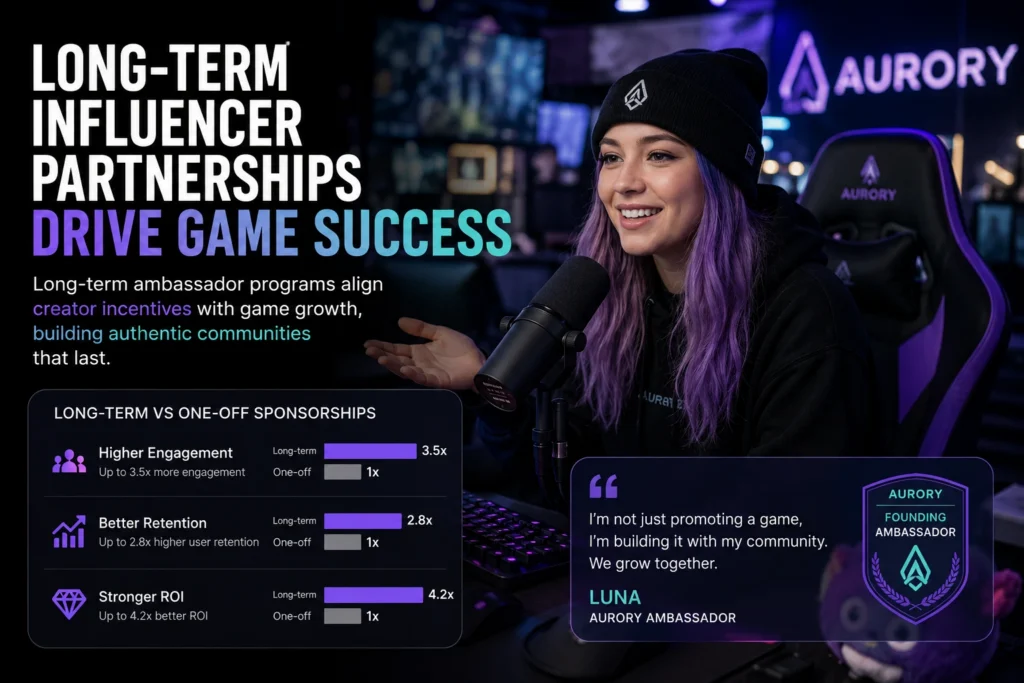
When a gaming influencer with 500,000 engaged followers endorses a blockchain game, the impact goes far beyond impressions. It drives wallet connections, NFT mints, and community formation. In 2026, however, the emphasis has shifted toward authenticity. Influencers who actually play the game and share genuine experiences deliver significantly better results than paid promotional placements.
The most successful Web3 gaming studios are building long-term ambassador programs rather than one-off sponsorships. They provide early access, exclusive NFTs, and revenue-sharing models that align the influencer’s incentives with the game’s long-term success. As a result, this approach transforms promotional content into organic advocacy that resonates with increasingly skeptical Web3 audiences.
Metaverse Advertising: The $7.5 Billion Opportunity
Metaverse advertising represents one of the most exciting frontiers in digital marketing. The market stands at $2.2 billion in 2025 and is projected to reach $7.5 billion by 2030 at a 27.32% CAGR. With over 600 million people actively using metaverse platforms and projections that 25% of consumers will spend at least one hour daily in the metaverse by 2026, the audience scale is approaching mainstream levels.
How Brands Are Advertising in the Metaverse
The metaverse is fundamentally changing how brands interact with consumers. Instead of interrupting users with ads, brands are drawing them into immersive branded worlds. Fashion houses like Gucci, Burberry, and Dior have set up digital shops. Similarly, Nike and Coca-Cola use metaverse environments to sell products through gamified experiences. A survey of 200 brands found that 33% allocate 10 to 20% of their budgets to VR projects.
Consumer expectations are evolving to match. Research shows 59% of consumers expect brands to advertise through direct messages in metaverse environments. Furthermore, 52% anticipate pop-up ads in virtual spaces, and 52% expect influencer-led approaches within the metaverse. Traditional banners and static social content are no longer sufficient. Immersive interaction determines success.
Practical Metaverse Ad Formats
For advertisers looking to enter the metaverse today, several formats are proving effective. Virtual billboards and environmental placements within popular gaming worlds provide brand awareness at scale. Branded virtual events, from concerts to product launches, generate high engagement and earned media coverage. Interactive product experiences where users try virtual versions of physical products bridge the digital-physical gap. Sponsored mini-games within larger metaverse platforms deliver both engagement and data-rich audience insights.
The DeFi Marketing Crossover
Web3 gaming increasingly intersects with DeFi through play-to-earn mechanics, in-game token economies, and NFT marketplaces. Marketing these hybrid projects consequently requires strategies from both the gaming and DeFi playbooks. The DeFi market is expanding toward $390 billion by 2030, and the most successful DeFi advertisers use hybrid strategies: starting with CPM for brand building, then transitioning to CPA once data identifies high-performing audiences.
For GameFi projects, this means leading with gameplay-focused awareness campaigns before layering in wallet-connect and token-purchase conversion campaigns. This funnel-based approach is also well established in iGaming performance marketing, where operators use similar hybrid models to acquire and retain high-value depositors. The audience overlap between iGaming and Web3 gaming is significant, making cross-vertical targeting a valuable growth lever.
Trust-First Marketing
The single most important lesson from DeFi marketing applies directly to Web3 gaming: safety sells better than speed. The most persuasive campaigns highlight smart contract audits, compliance partnerships, and security certifications. Furthermore, education beats hype. Tutorials, risk breakdowns, and open Q&A sessions are replacing speculation-driven culture with sustainable community building.
Blockchain-based ad networks offer enhanced data security, reduced ad fraud, and improved targeting through decentralized ledger technology. In particular, for Web3 gaming projects, these networks provide access to crypto-native audiences with higher intent than general gaming audiences.
Building Your Web3 Gaming Marketing Stack
Based on what is working in 2026, here is a practical framework for marketing Web3 games effectively. Specifically, each of the five elements below addresses a distinct phase of the player journey.
1. Community First, Ads Second:
Build a Discord and Telegram community before launching paid campaigns. Organic community members become your most effective evangelists and provide crucial feedback loops. Web3 gaming lives and dies by community strength.
2. Hybrid Channel Strategy:
Combine Web2 reach (Facebook, Reddit, Google) with Web3-native targeting through blockchain ad networks and crypto publications. Use content distribution platforms like Medium and LinkedIn for SEO-friendly thought leadership that ranks in both traditional and AI-powered search engines.
3. Dynamic NFT Marketing:
NFTs that evolve based on in-game progression are a powerful marketing hook. Create NFTs that gain value through gameplay to drive both acquisition and retention. Fashion brand collaborations bridging digital-physical ownership demonstrate this model effectively.
4. Data-Driven Retention:
Combine on-chain data (wallet activity, token holdings, transaction frequency) with off-chain insights (session length, feature usage, social engagement). Implement predictive churn detection and lifecycle segmentation to keep players active. Referral programs are particularly effective for budget-conscious growth.
5. AI-Powered Optimization:
With 89% of gaming companies planning to increase marketing budgets focused on AI-driven campaigns, AI is no longer optional. Use it for creative testing, audience segmentation, bid optimization, and predictive modeling. AI is reducing game development timelines by up to 65%, and the same efficiency gains are available in marketing operations.
The Road Ahead
Web3 game marketing in 2026 is defined by maturity, measurability, and authenticity. Projects that succeed treat marketing as a long-term investment in community and gameplay quality, not a short-term token promotion exercise. The metaverse is opening new advertising frontiers, DeFi mechanics are creating novel player incentive structures, and AI is making it possible to optimize campaigns with unprecedented precision.
At $33.4 billion today and heading to $183 billion, this market is enormous. Consequently, the question is not whether Web3 gaming will be massive. It is whether your marketing strategy is built to capture that growth. Looking to market your Web3 game or metaverse project? Contact AdsNetwork for blockchain-native advertising solutions and AI-optimized user acquisition strategies designed for the Web3 ecosystem.
Featured Posts
Oct 23, 2026
10 min read
What Is CPM in Advertising? Meaning, Formula and 2026 Rates
CPM is the cost an advertiser pays for 1,000 ad impressions, making it one of the most common…
Read Article
Sep 23, 2026
6 min read
What Is Advertising Technology (AdTech) and How Does It Work?
Advertising technology, commonly known as AdTech, refers to the software, platforms, tools, and systems used to plan, buy,…
Read Article
Sep 16, 2026
8 min read
Media Buying: A Complete Guide for Advertisers
Media buying is the process of purchasing advertising space to reach a target audience. It includes choosing where…
Read ArticleNeed Help?
Our team is ready to help you launch successful campaigns.
AI-Powered Mobile
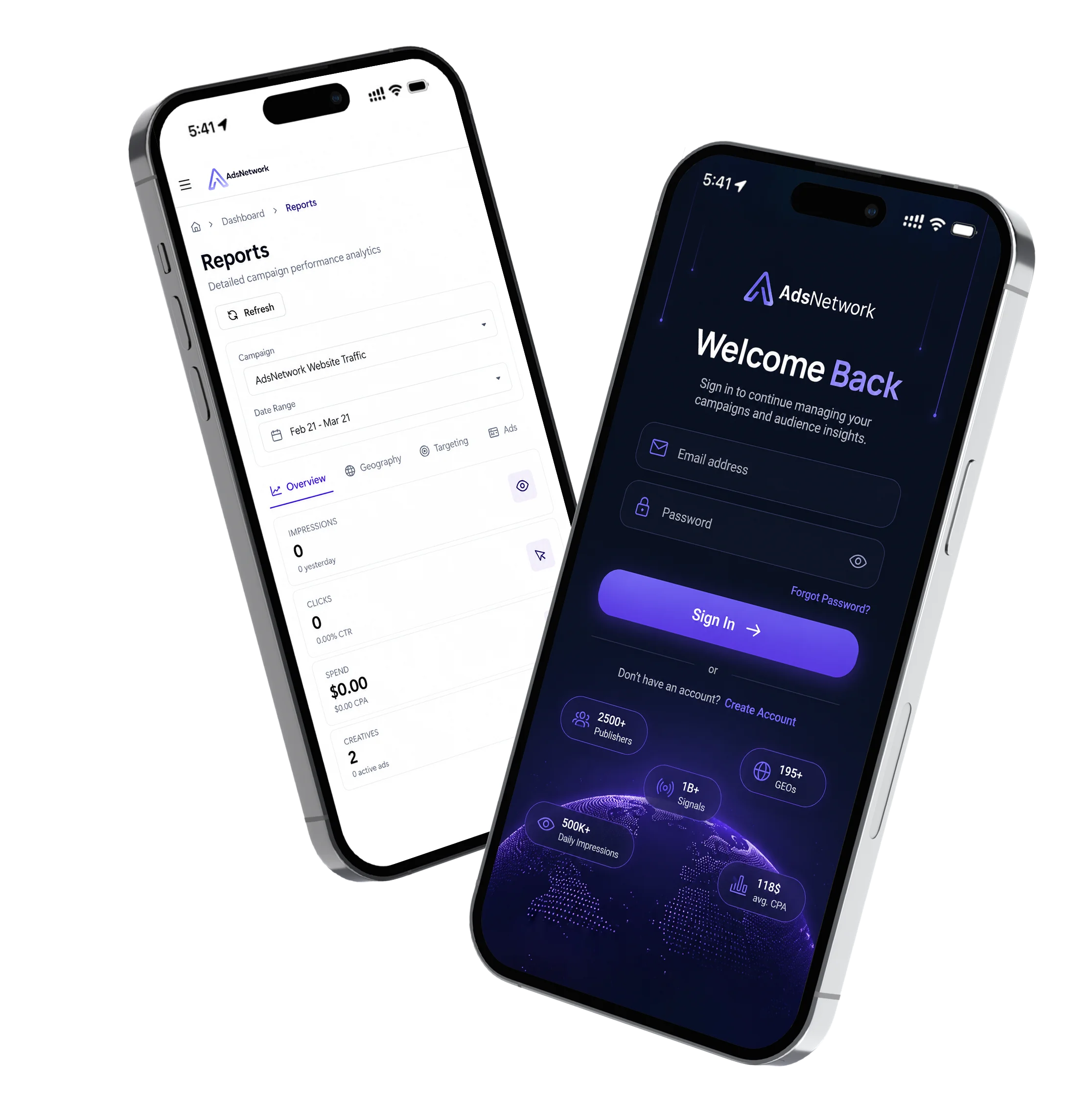
Monitor Your Campaigns Anywhere
Stay connected to your live AdsNetwork campaigns with our mobile advertising app. Track impressions, clicks, conversions, campaign spend, and overall performance in real time—anytime, anywhere. Available for iOS and Android.